Dingle Peninsula to the Cliffs of Moher

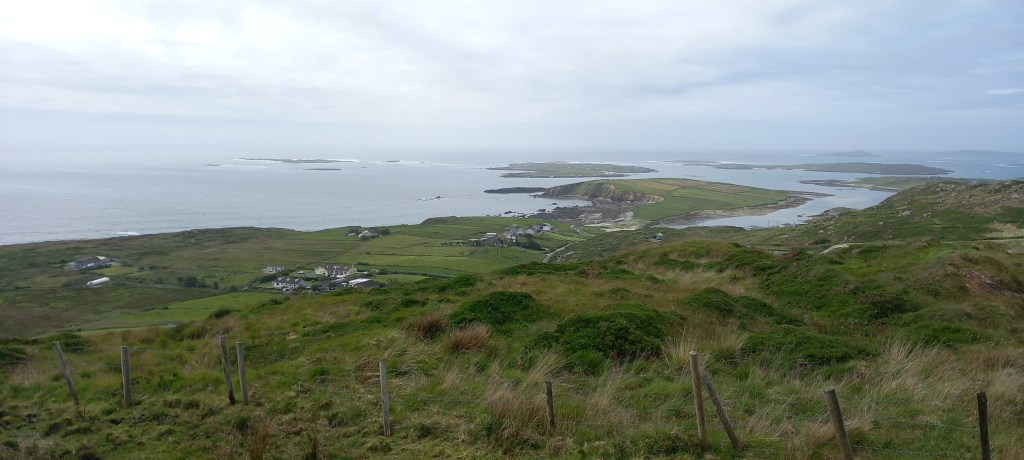
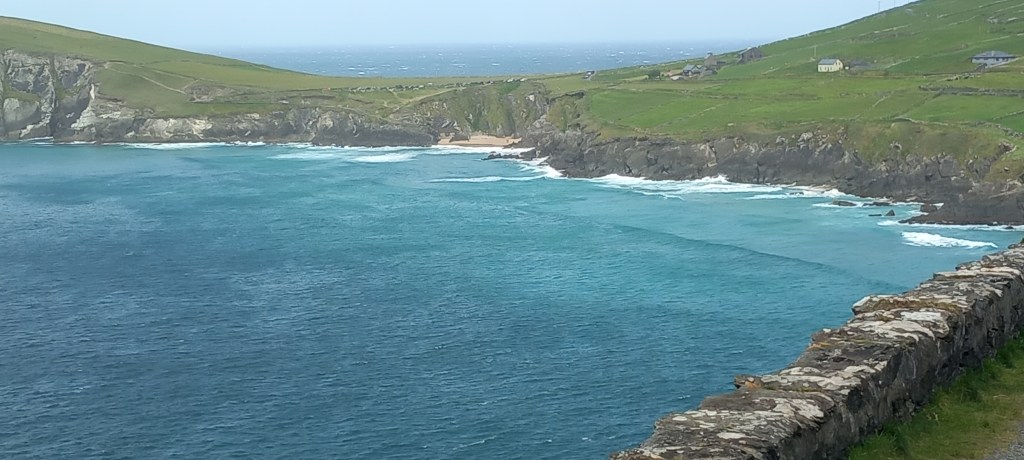
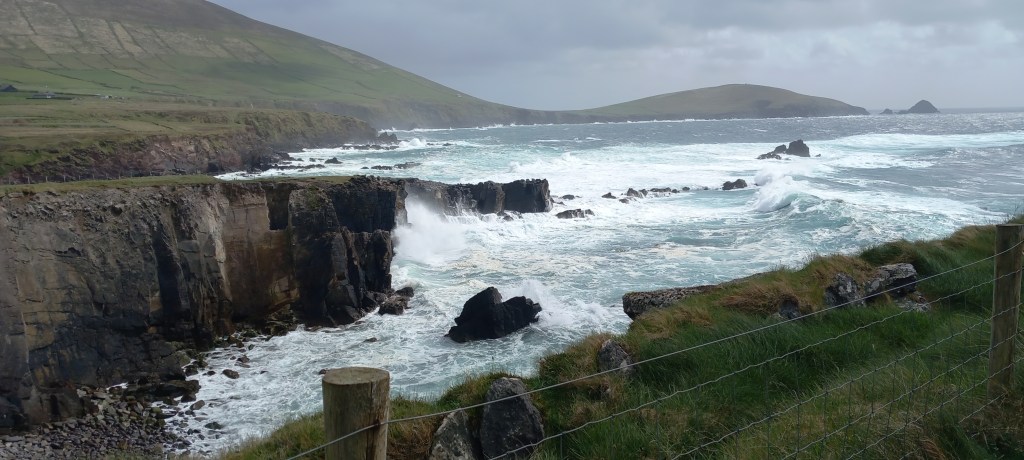
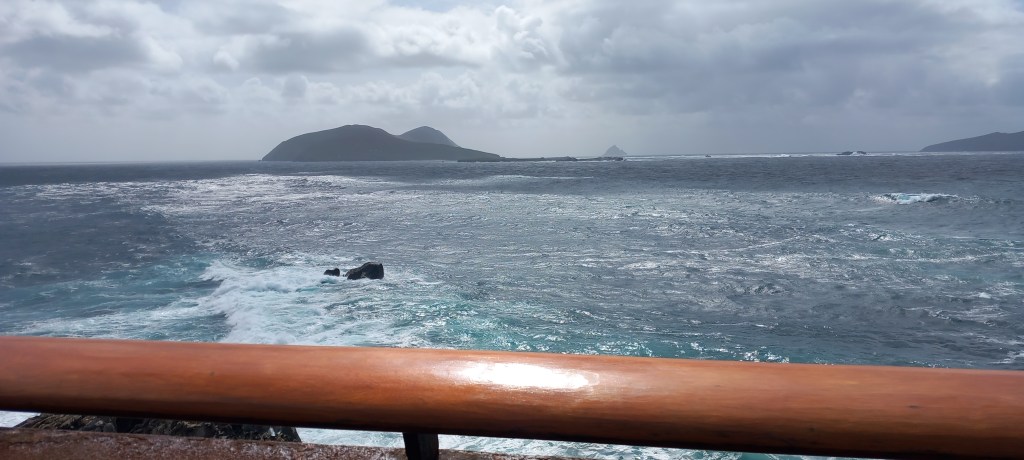
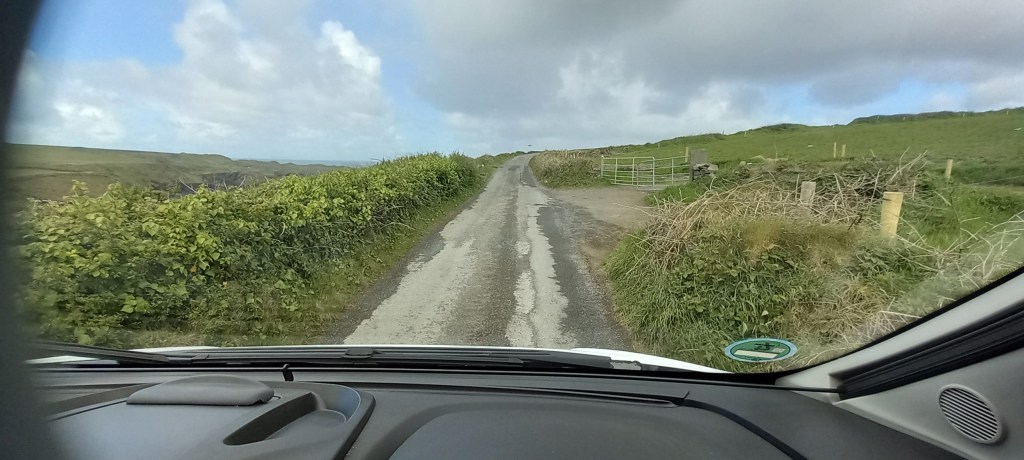
Several of you loyal followers have mentioned that we must NOT miss the Dingle Peninsula.  We were not disappointed!  Wild and windy, with buffeting seas – we drove all the way to the point, including the Slea Head Drive, which was even narrower than usual!!  But it led us to idyllic beaches and little hamlets.  The winds were too strong to even consider a boat trip out to the Blasket Islands. 

The Blasket Islands were inhabited continuously from about the 17th century until the final evacuation in 1953.  Around 180 people lived out there in the 1920’s, living a very hard life, with no electricity or running water.  Trips to the mainland for any supplies were always dependent on calm seas – which don’t happen very often!  The inhabitants spoke Irish, and several well-known scholars stayed on the islands for several months to learn the language.  The scholars encouraged the inhabitants to write about their life on the Blaskets.  Several books have been written which will ensure that the Blasket Island historical significance is not forgotten.  The Blasket Centre in Dunquin is absolutely fabulous (highly recommended for anyone heading in that direction) – as a member of English Heritage you get in free!  Very well interpreted, and gives lots of fascinating information about how life was on the Blaskets. 

You’ll be amused to hear that we got caught out in thinking that we could ‘get anywhere’ in Molly!  We set off to drive the Connor Pass which goes through the mountain range down the centre of the Dingle Peninsula.  This was going to be our short cut to our next campsite.  But we came a cropper – no signs at the beginning of the road to give maximum widths and heights  (we have come across these a lot!) – BUT ten minutes into the journey THERE was the sign!  In big yellow letters – maximum width 1.8 m (we are 2.3) – TURN AROUND HERE it said.  Of course, a narrow road in the middle of nowhere!  Luckily, my navigator, walked back and found a gateway.  I reversed (without running into the hedge) and managed to turn around – and we cursed as we drove all the way round the long way!  

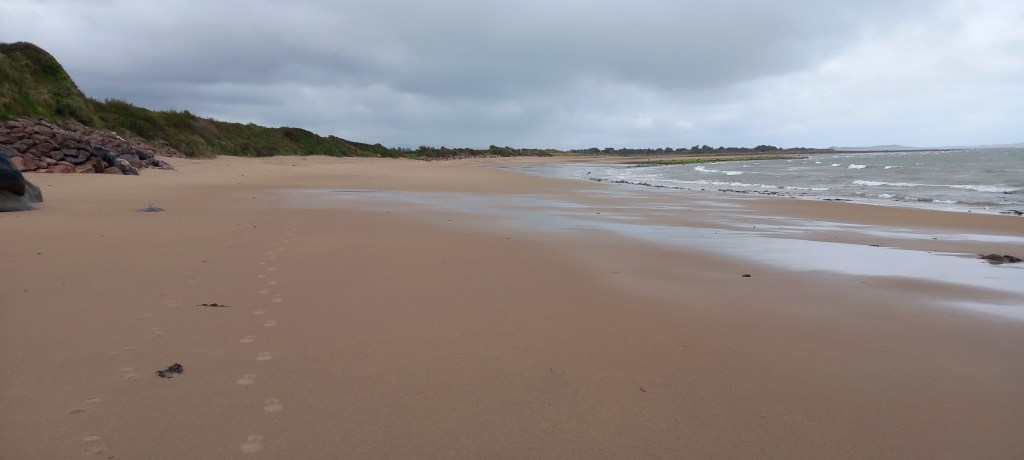
We stayed in Castlegregory for a couple of nights, a) to have a rest from driving and b) to ride out a big storm. We were battered by wind and rain, even though we were on a site nestled behind the dunes of the Castlegregory beach.  Long, bracing walks along the beach were the order of the day. 

A quick visit to Tescos in Tralee enabled us to stock up the food cupboards once again.  Tescos always have huge carparks with room for motorhomes!  Heading north and following the coast all the way – passing Ballyheigue and Ballybunion (for those following us on the map) we caught a ferry from Tarbert to Killimer across the River Shannon, bringing us onto the Loop Head Peninsula.  It is clear that County Clare doesn’t look after it’s roads any better than any other county – and we think our roads are bad in UK!  Luckily, there are too many wonderful views to look at, so going fast is not an option. . .we made it to Loop Head Lighthouse but didn’t venture outside, due to heavy rain and strong winds – AGAIN! 

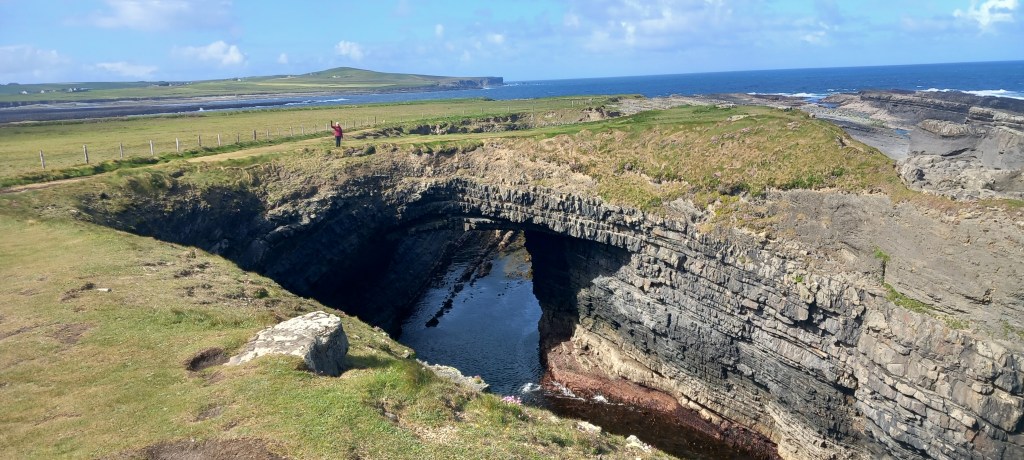
But the skies cleared for our visit to the Bridges of Ross – well, we HAD to go there didn’t we!  There used to be three sea arches here, but two of them collapsed in the 1800’s.  The remaining one is very dramatic, but almost impossible to get a good photo. 

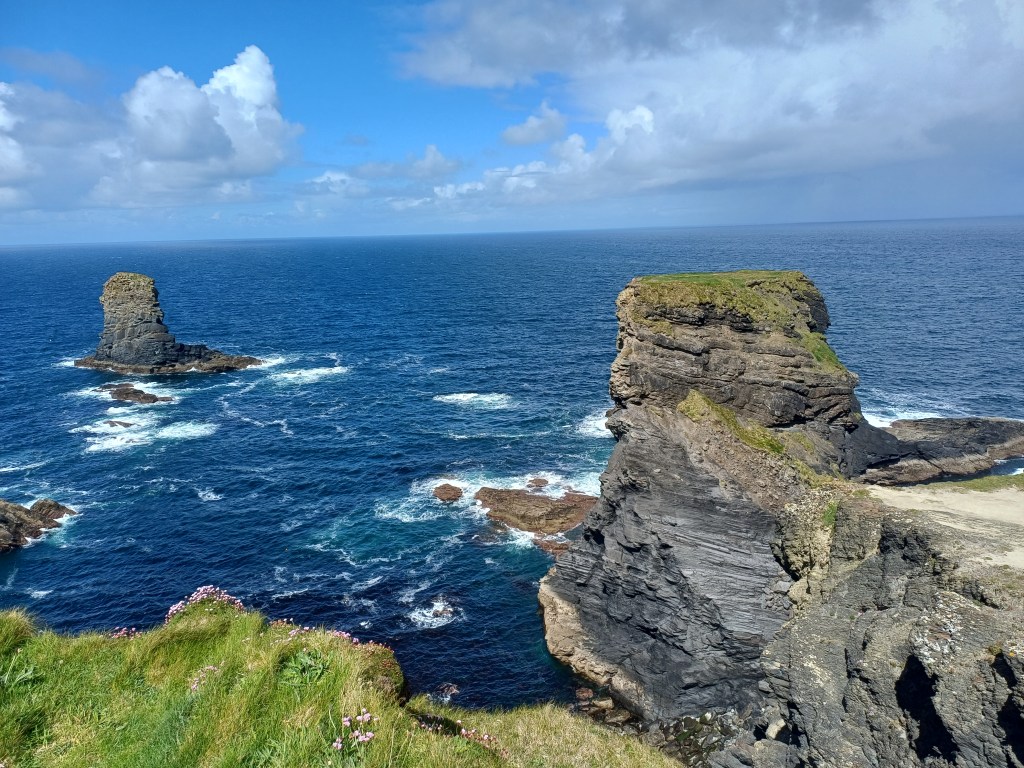
The nearby Kilkee Cliffs are wonderfully rugged and lashed by waves – caves and sea stacks in abundance, plus a plethora of sea birds.  We were spoiled in that we were pretty much the only people on the road for the morning. 

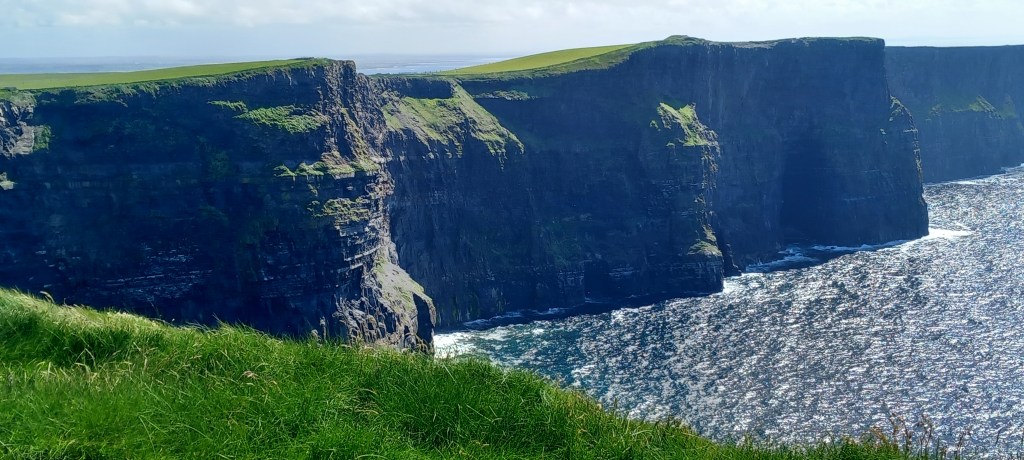
Things changed in the afternoon, as we reached the Cliffs of Moher – these spectacular cliffs drop 214m into the sea and stretch for some 8km.  However, it has become a HUGE tourist destination – coach loads of people and car parks brim full – cliff walks, viewing platforms and a visitor centre.  Sadly, the sun wasn’t in quite the right position to snap the infamous cliffs at their best. 

Our campsite tonight, should really be called a Motorhome carpark!  Overbooked we think – electric cables spread everywhere – and all because the site is ten minutes drive from the Cliffs of Moher.  Hopefully, we’ll be back to quiet roads tomorrow as we continue north to Galway. 

Beara Peninsula & Ring of Kerry

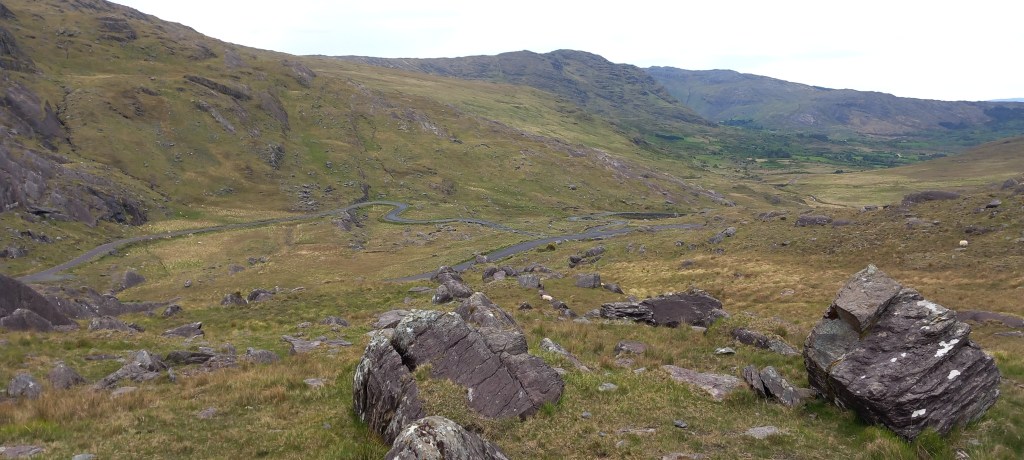
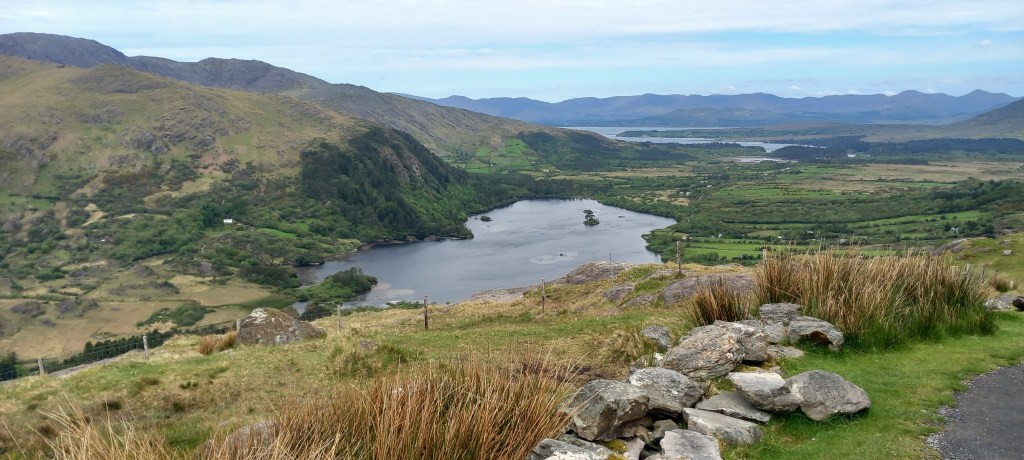
The Healy Pass is a winding, twisting route which passes through the highest summits of the Caha Mountains on the Beara Peninsula.  The road is an inspirational piece of construction not least because it snakes and climbs steeply through solid rock.  Views from the top were worth Molly’s effort in getting up there!

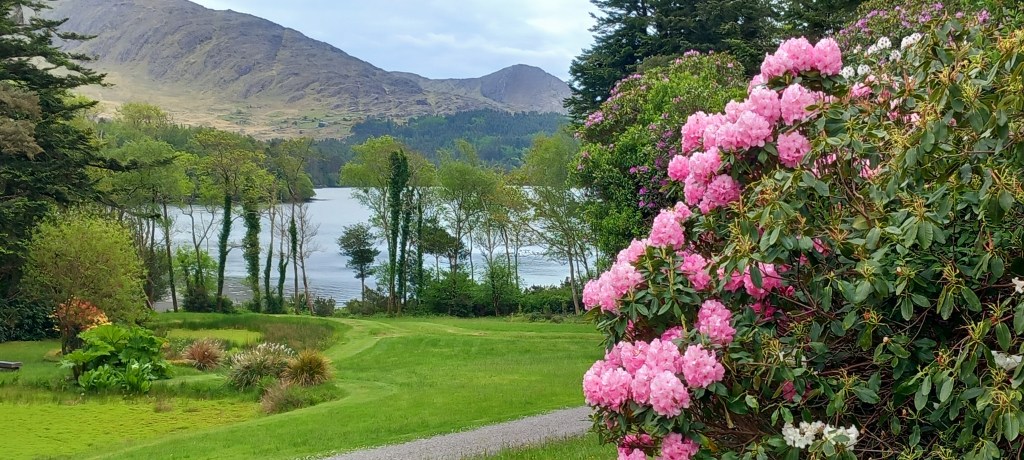
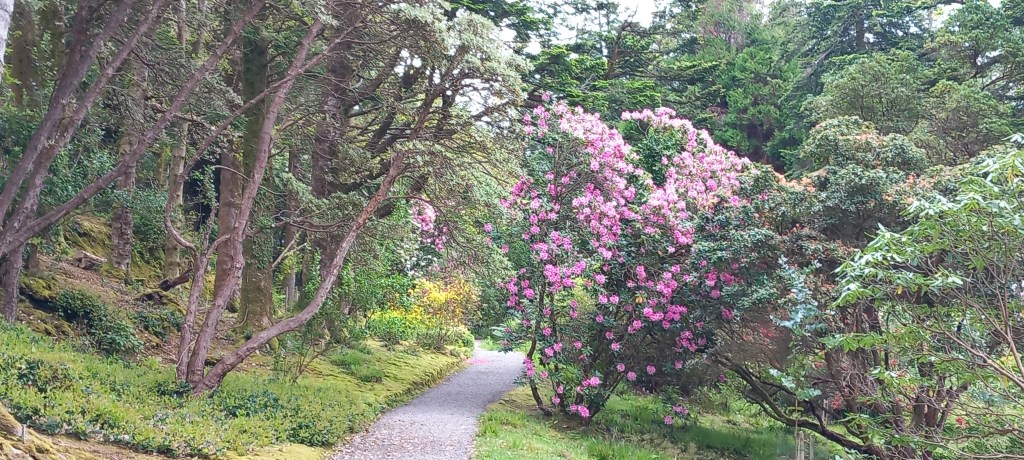
The dull, grey weather warranted a garden visit – Derreen Gardens fitted the bill perfectly – a lovely 19th Century woodland garden with many rare plants and trees that have been collected and planted over 150 years.   Paths meander through the woods and suddenly we were treated to a splendid view of the harbour and mountains.  Members of the Derreen family still live on site. 

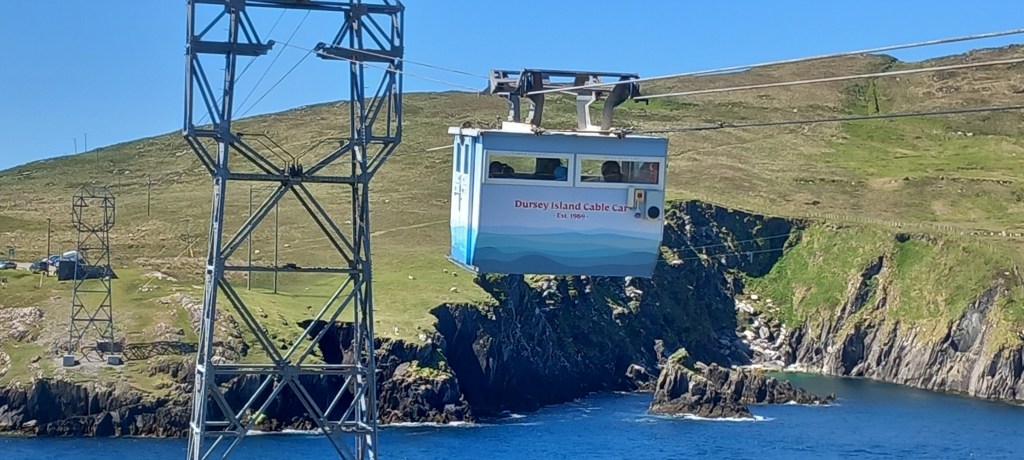
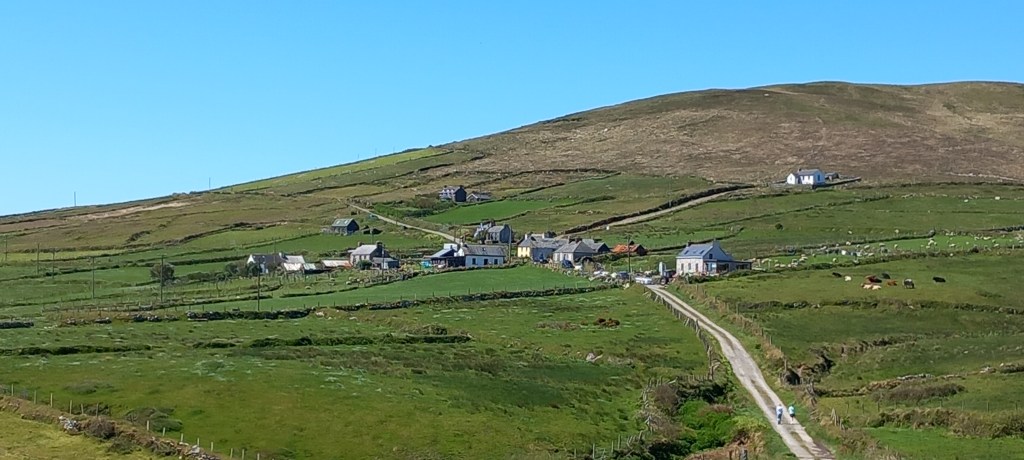
Very narrow, winding roads led us out to the tip of the Beara Peninsula, where we bravely took a short Cable Car ride, 250m above the water to Dursey Island.  This  rickety little wooden box only takes six people at a time, and dropped us on Dursey for a walk and a bit of escapism!  Bright sunshine with the inevitable cold wind accompanied us – a few houses and a lot of sheep make this a pretty remote community.

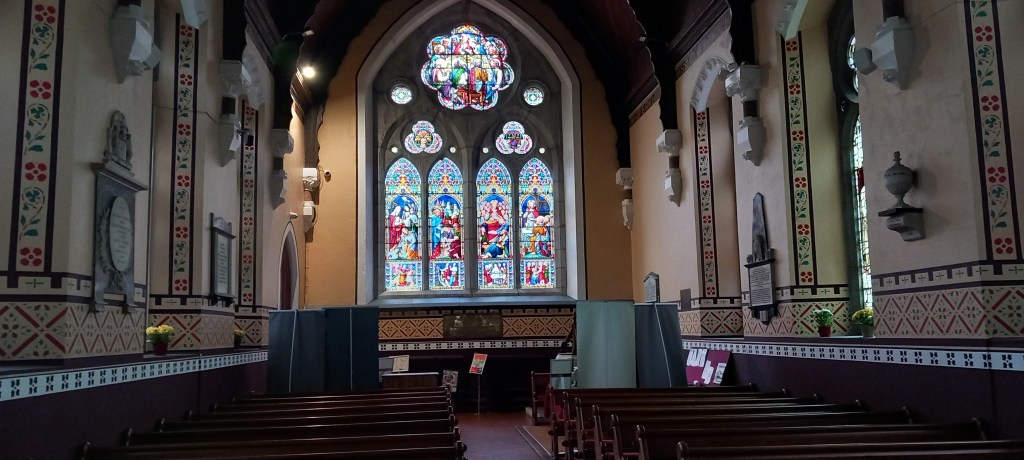
Early morning mountain mist shrouded any views as we made our way over another mountain pass – appropriately called Moll’s Gap! – to Killarney.  A lovely town with a population of some 14,000, we particularly enjoyed visiting St Mary’s Church of Ireland – Splendid stained-glass windows are complimented with stunning paintwork around the walls.  There have been churches on this site since the 1200’s – the present one was built in 1870. It was originally known as the Church of Sloes (they grow well in this area) – ‘Cill Airne’’ in Gaelic which gave its name to Killarney. 

The Ring of Kerry forms a large part of the Wild Atlantic Way on the Iveragh Peninsula.  It was strongly suggested that we drive the ROK in an anticlockwise direction which is the same direction that tour buses go.  We were SO GLAD we took that advice.  To meet a tour bus on the narrow windy roads would NOT have been any fun!  The Skellig Ring is beyond the ROK and too narrow for the large tour buses but GOOD OLD MOLLY managed it, and we were rewarded with some wonderful scenery and superb views.

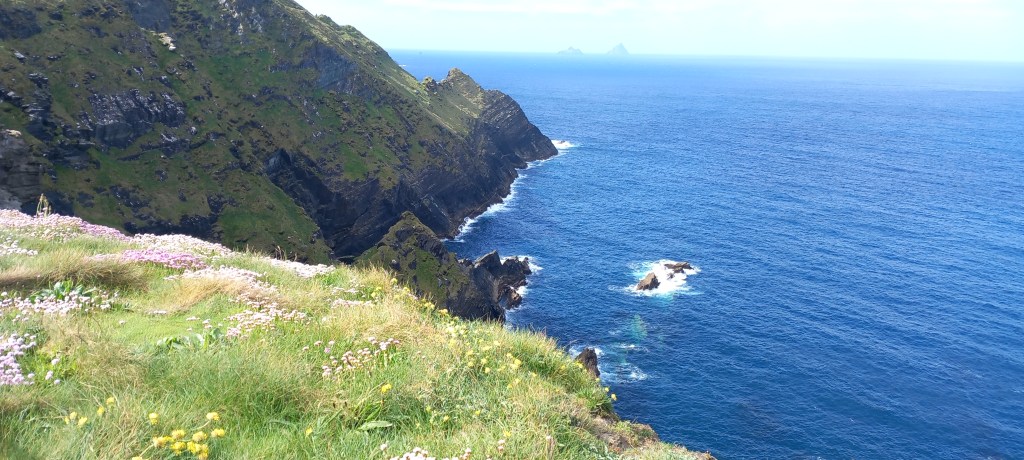
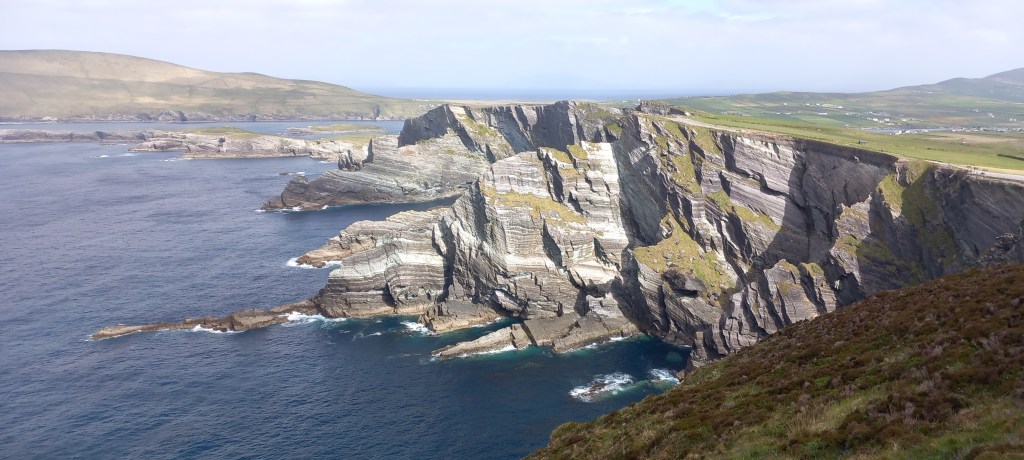
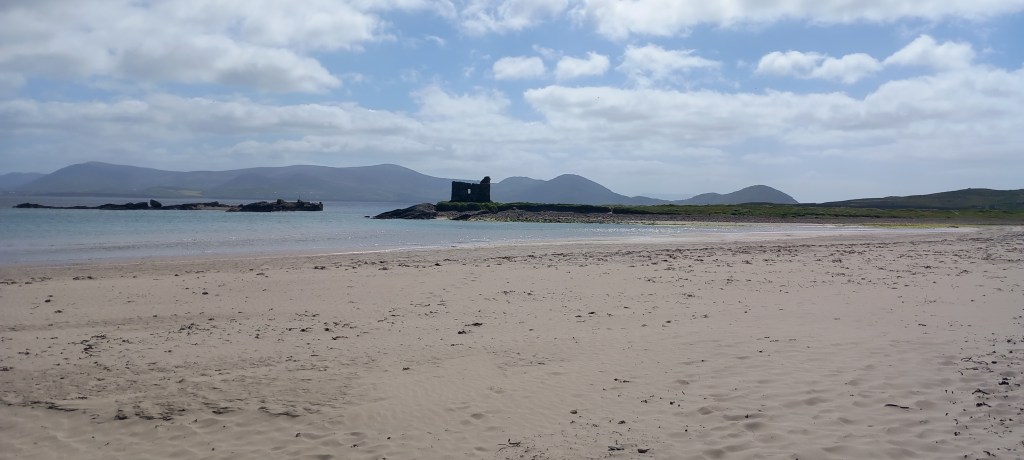
The Kerry Cliffs were our favourite view of the day  (and each day’s views are getting better and better!), but we also enjoyed a walk near Ballinskelligs Beach – believe it or not, one of the first transatlantic telegraph cables was laid from here to Nova Scotia in Canada in 1875. From the combined efforts of the various companies in the mid 1800’s, to the  Global Communications we enjoy now, we have a lot to be grateful for. 

See you next time . . . .
Tramore to Glengarriff

Tramore to Blarney

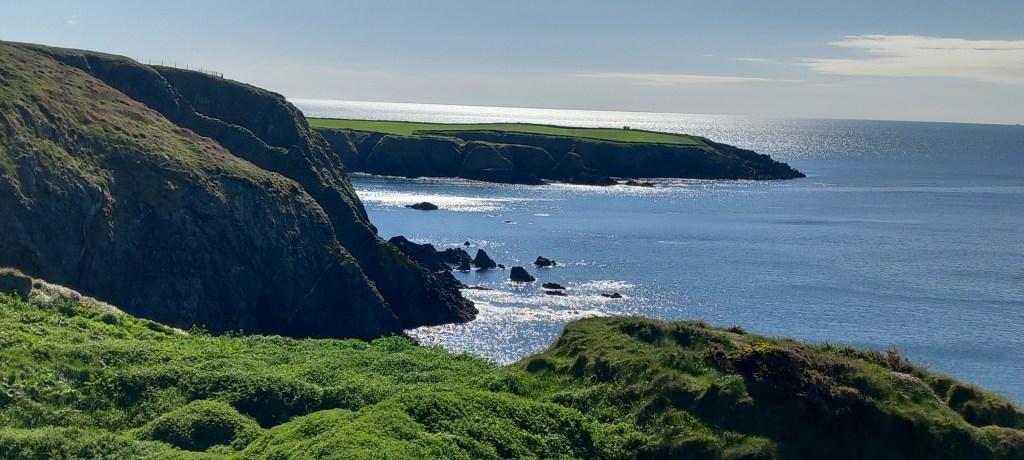
Blessed with more good weather, we headed along the southern coast road for a while, just to drink in the wonderful sea views, with the sun sparkling on the water.

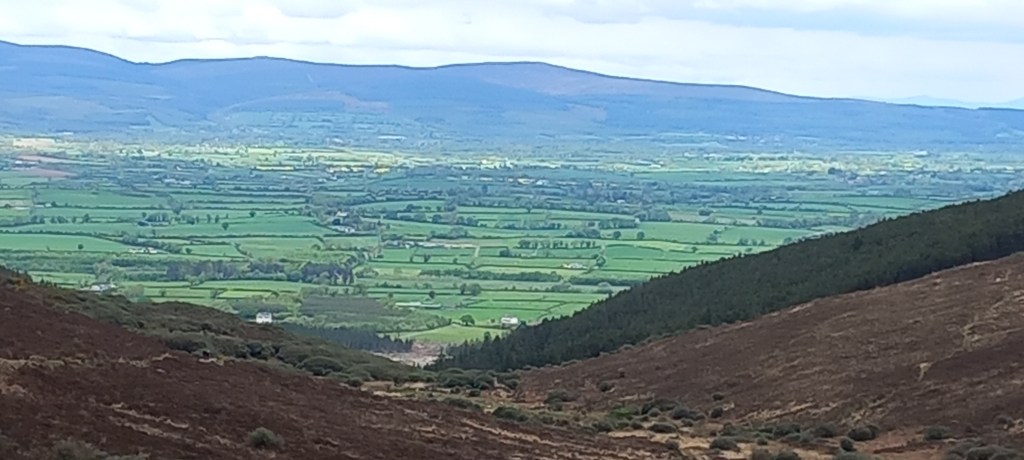
Having had a quick taste of the sea, we headed inland to the Knockmealdown Mountains  which run from east to west between the counties of Waterford and Tipperary.  I was thrilled to think that we were passing through Tipperary, as my dear father used to sing us a song about Tipperary when we were kids!  We stopped at the top of the pass – Called The Vee – to have a walk.  It was a very quick walk, as the wind was bitterly cold, but there was a good view through to the valley below. 

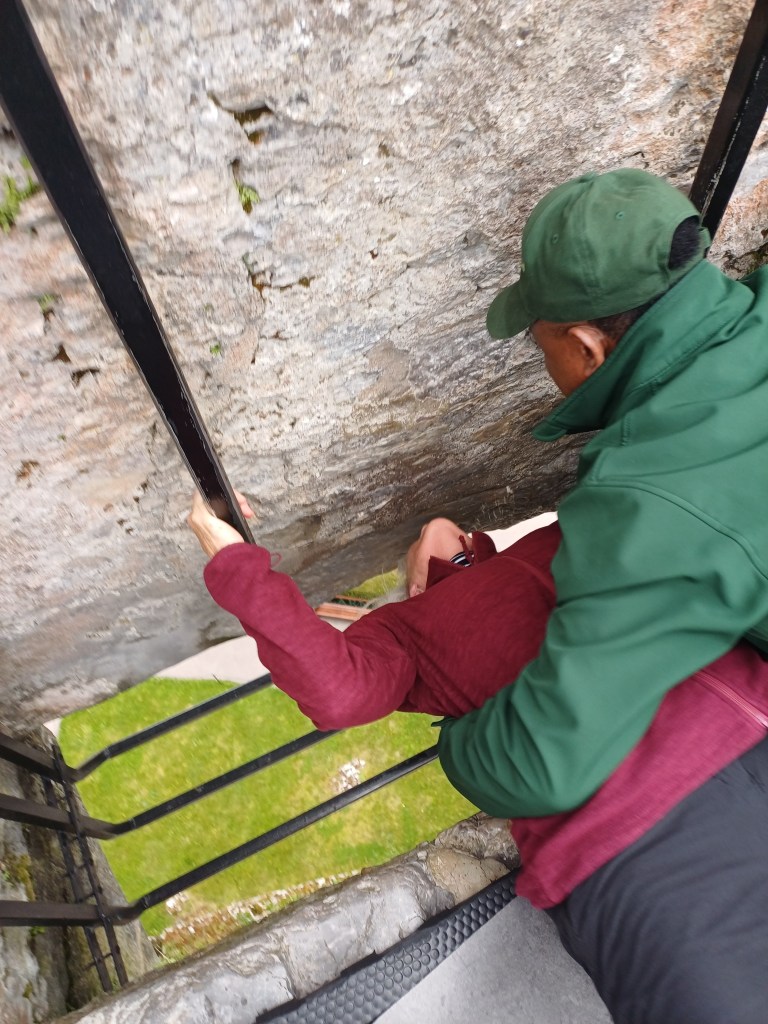
Making our way south again, we stayed near the town of Blarney, just north of Cork.  Now we couldn’t be in Blarney without ‘kissing the stone!   The stone is a block of limestone built into the castle walls.  Legend has it (and there are several legends!) that the Scottish King, Robert the Bruce, gave half of the Scottish Stone of Scone to the King of Munster, Cormac McCarthy, in 1314, in gratitude for his support during the Battle of Bannockburn.  We walked 2.5 km to the castle, then joined the queue with (you guessed it) bus loads of Americans!  A very narrow spiral staircase of 130 steps led us up through the turret.  Woops and shouts from the Americans “OH MY GOD!” accompanied each and every one of us, as we laid on our backs and tipped backwards towards the grating under the stone (being cleverly supported by a member of staff), and gave the stone a quick peck!  Now, will this make us more eloquent??  Answers on a postcard please . . . . . . .
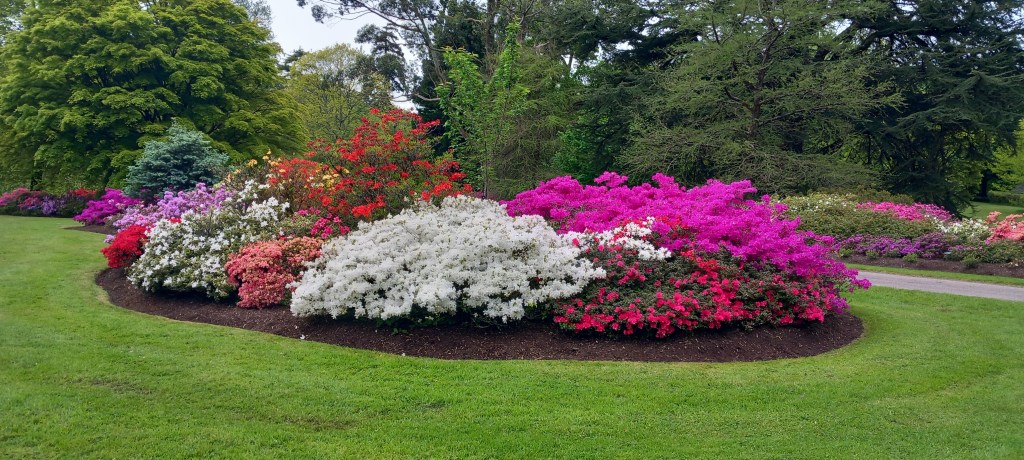
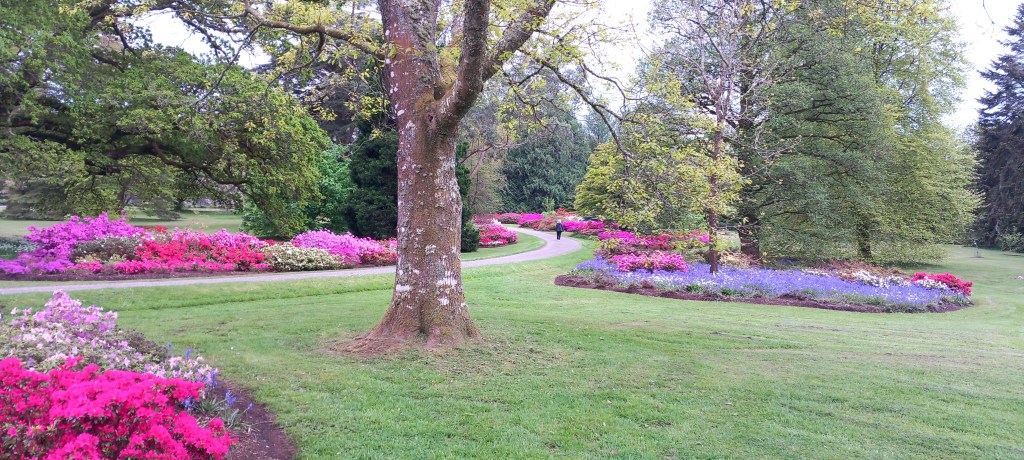
A calming walk around the castle gardens did not disappoint.   The diversity and intensity of the colours was breath-taking.
Blarney to Skibbereen

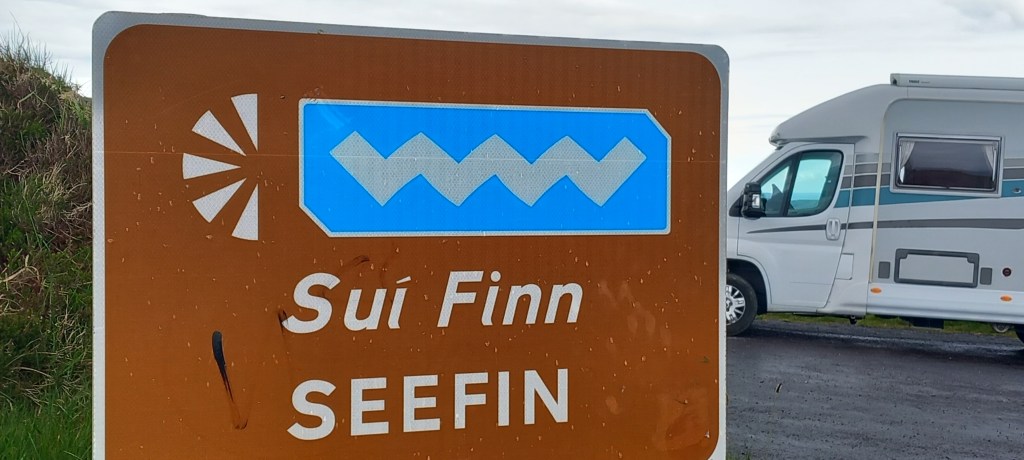
 The Wild Atlantic Way begins just before Kinsale, which is south of Cork.  It is fairly well signposted  (I had to turn Molly around a couple of times today!) with a bright blue wavy line.

This road trip follows fantastic coastlines around never-ending peninsulas, meanders through peaceful countryside, and potters through little towns & villages with a great array of local crafts and cafes.  Epic mountain passes with lots of hair pin bends coupled with a lot of single-track roads have given Molly a few challenges.  However, the marvellous views and friendly locals more than make up for the odd “breathe-in” moment!

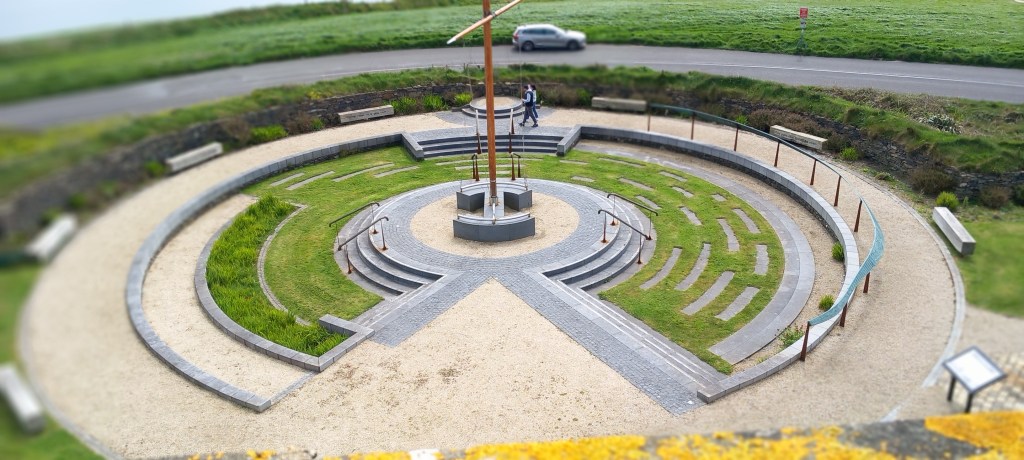
 In the early 1800’s, there were 81 signal towers operating around the Irish coast in response to the threat of a French invasion.  Sadly, most of these are now in ruin.    The Old Head Signal Tower has been rebuilt and is home to the Lusitania Memorial.  A German UBoat sank the Cunard Liner in 1915, killing some 61% of the 1,960 people on board. 

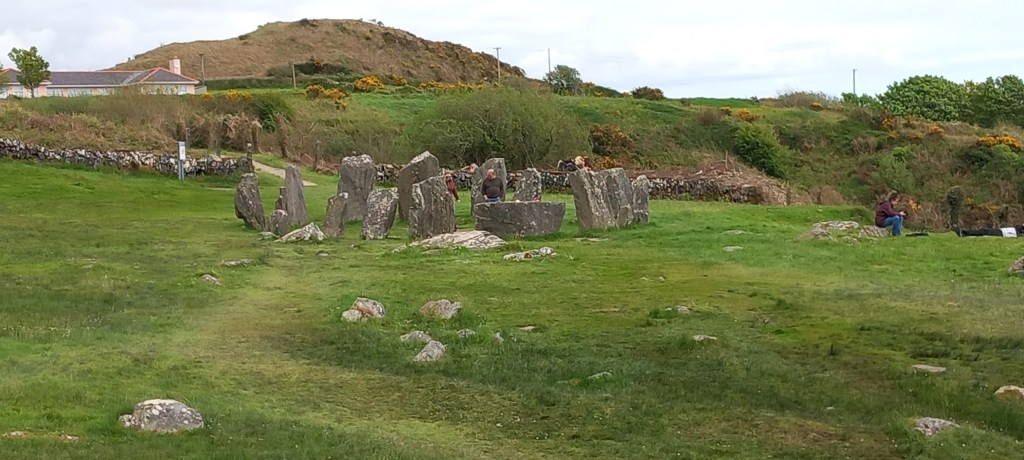
The Bronze Age Stone Circle at Dromberg features 17 stones which are perfectly aligned for the midwinter solstice sunset. 

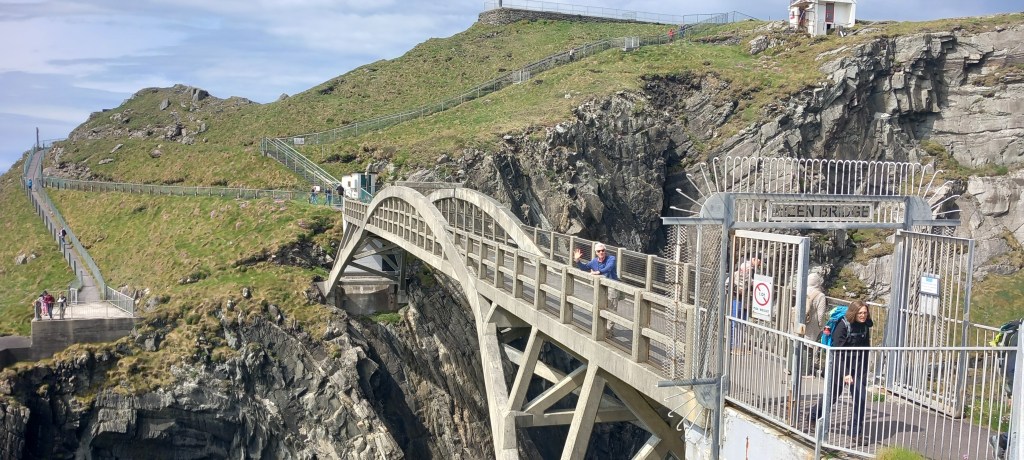
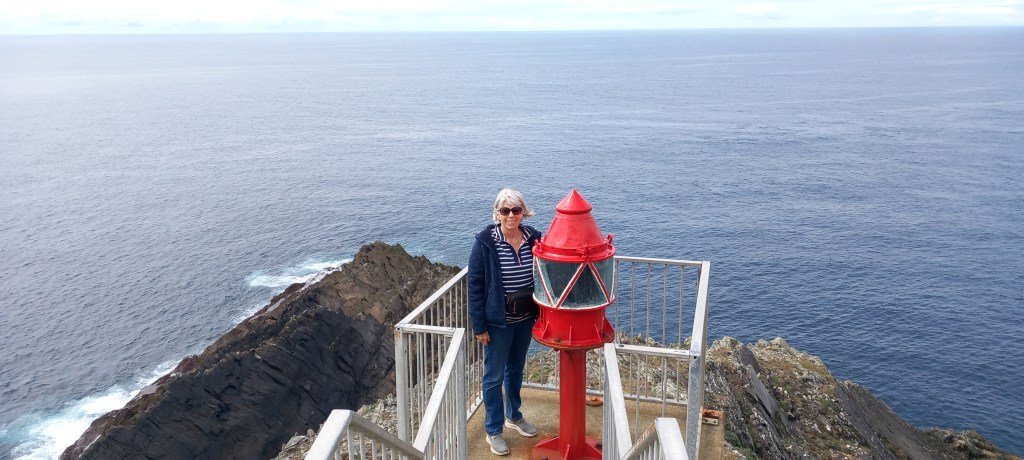
Today’s journey has taken us to the southern most tip of Ireland at Mizen Head.  Driving by beautiful tree lined inlets and expansive white sandy beaches, we eventually arrived at the head of the peninsula.  Extensive cleverly built ramps allow access out to the point, including a well-known bridge (it is on EVERY postcard) which sits at 150ft above sea level.  Bright sunshine and a very light breeze accompanied us – and even more delightful was the joy of watching a Basking Shark, along with the few seals, feeding quite near the rocks. 

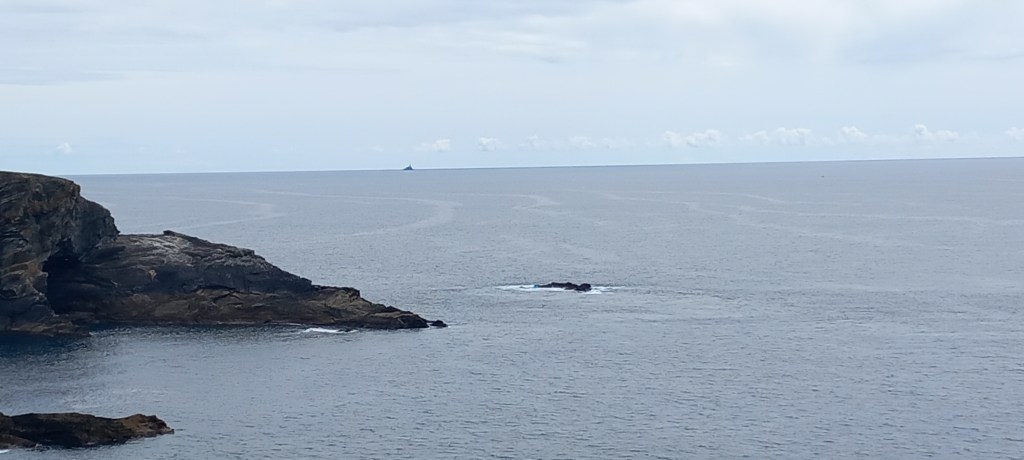
Fastnet Rock Lighthouse was easy to see today, about 10 miles offshore.  Sadly my camera is not good enough to get a clear photo. 

Thank you dear followers for all your messages . . . . . see you in a few days time.

Dublin to Waterford

**Warning this is quite long with lots of photos – make a coffee, sit down and enjoy!**

Dublin:

Despite high winds, we had a fairly smooth crossing of the Irish Sea from Holyhead to Dublin.  Clear blue skies and sunshine followed us across the water and enriched a relaxed evening at our chosen campsite in  Corkagh Park in the Clondalkin suburb of Dublin. 

Dublin was founded as a Viking settlement in 988 AD. It has since evolved through medieval times, invasions, uprisings, and independence struggles into a very modern city. Luckily its history has survived in many hidden gems and some beautiful architecture.

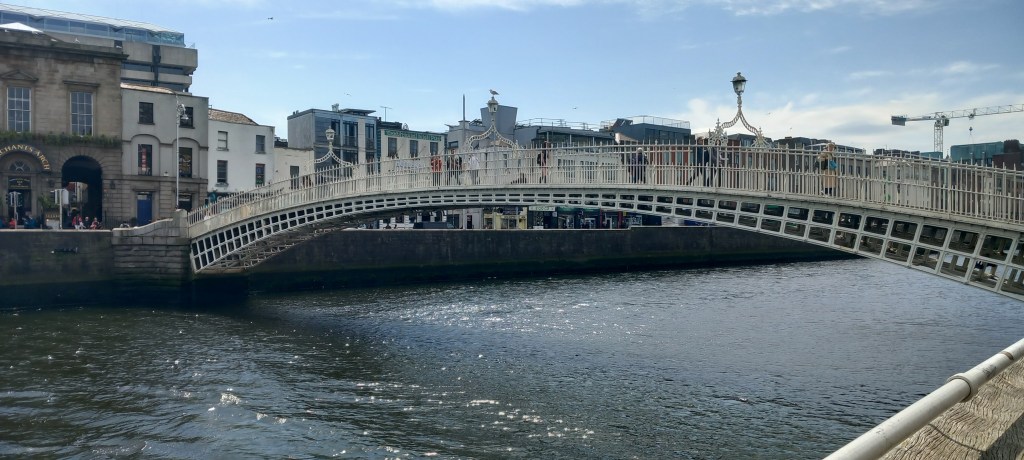
The Ha’Penny Bridge was erected in 1816, nicknamed as such because of the halfpenny toll charged until 1919.  It is one of the earliest cast-iron structures of its kind and serves as a busy pedestrian bridge leading to Temple Bar south of the river. This very atmospheric area is full of restaurants and bars – many of which have live traditional Irish music playing from 10am!! until after midnight. 

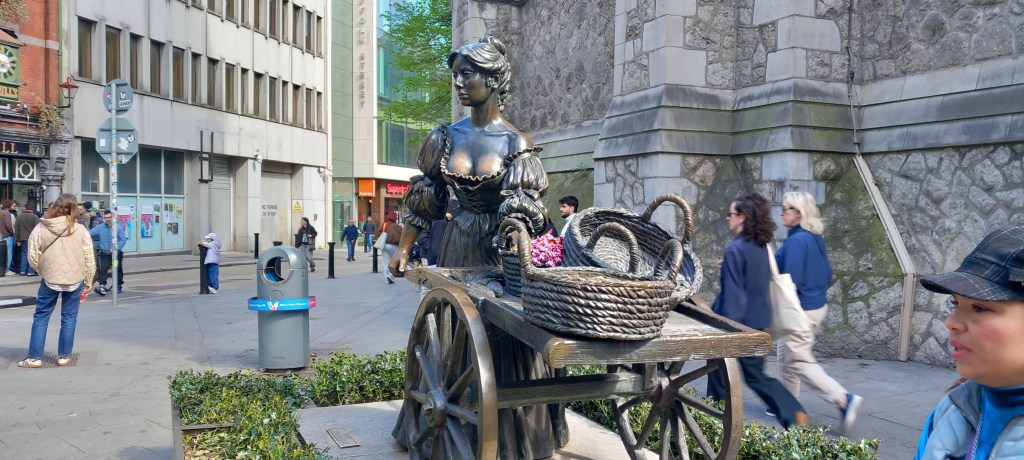
It is also home to the statue of Molly Malone – fictional or real (depends on who you listen to!), she was a fishmonger by day, and a lady of the night by night.  You will no doubt have heard the “Cockles & Mussels” song in which she is mentioned. 

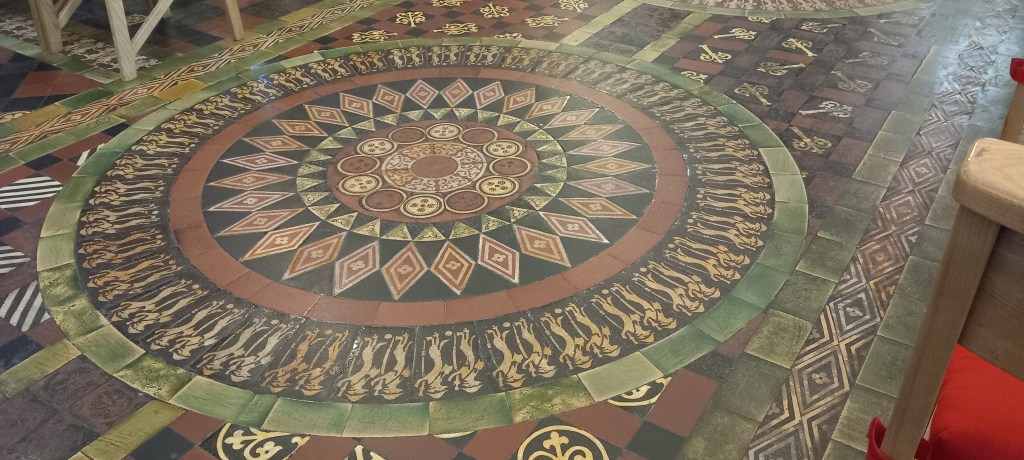
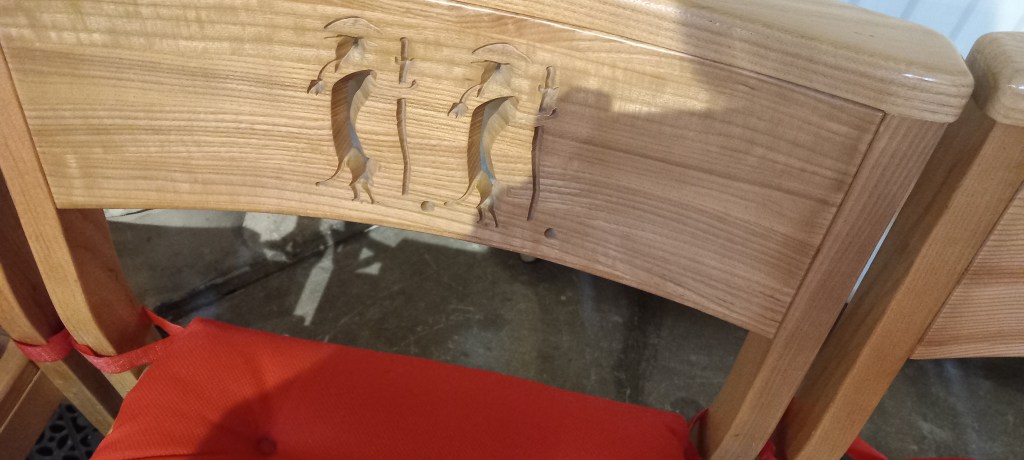
Christ Church cathedral is a wonderful mixture of medieval and 19th century, having been rebuilt, restored and renovated for more than a thousand years.  The quilters amongst you will understand that I am always on the lookout for interesting patterns and designs.  Christ Church’s floor tiles did not let me down.  I was very taken with the Foxy Friars –  foxes dressed as pilgrims complete with a brimmed hat, a satchel and a walking stick!  Those pilgrims doing the medieval route of the Camino Ingles (Dublin to Ferrol, Ferrol to Santiago de Compostela), may get their ‘pilgrim passports’ stamped at Christ Church.   The Foxy Friars are carved into the backs of all the church chairs – they also make up the Cathedral stamp. 

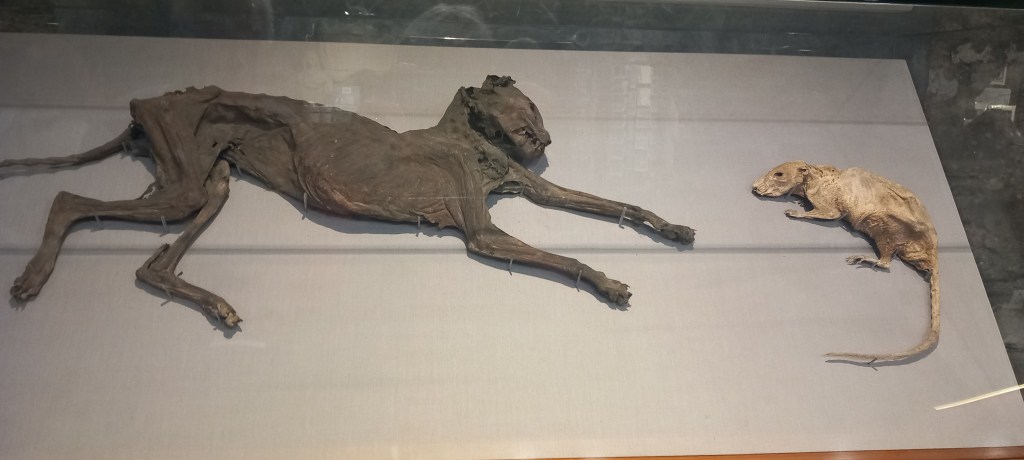
The Cat & the Rat

A rather sad (but cute) exhibit in the crypt shows us the Cat & the Rat.  The story goes that the cat chased the rat into an organ tube and neither of them could escape.  Their skeletons were found many years later (in the 1850’s) and are now mummified – locally known as Tom & Jerry!

There is much more to see and do in Dublin – we shall return one day . . .

Wicklow Mountains

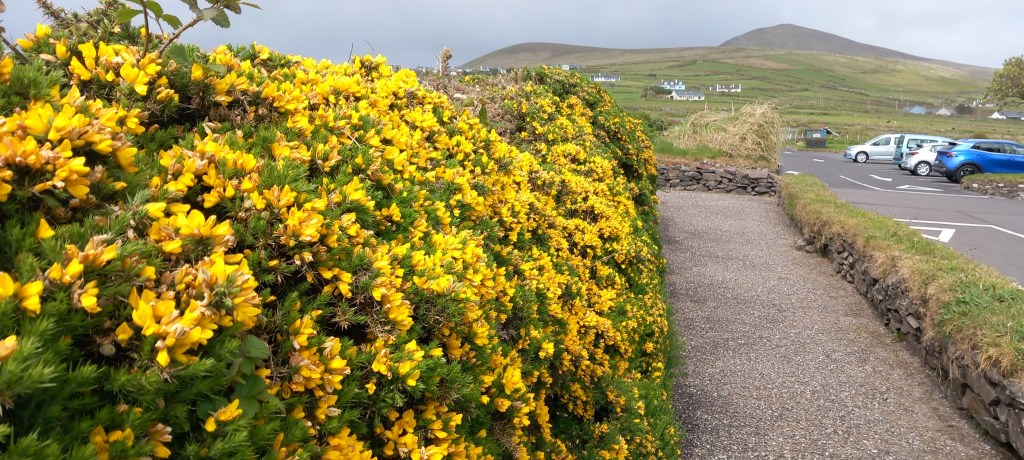
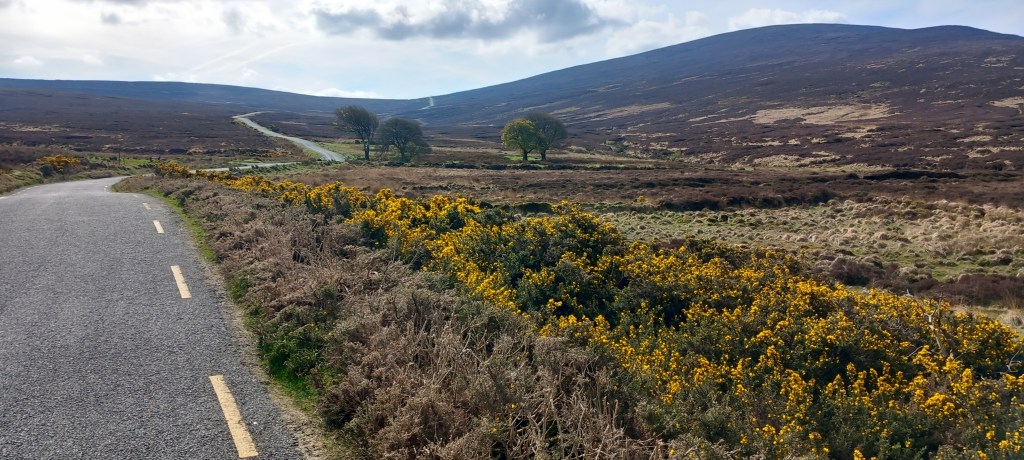
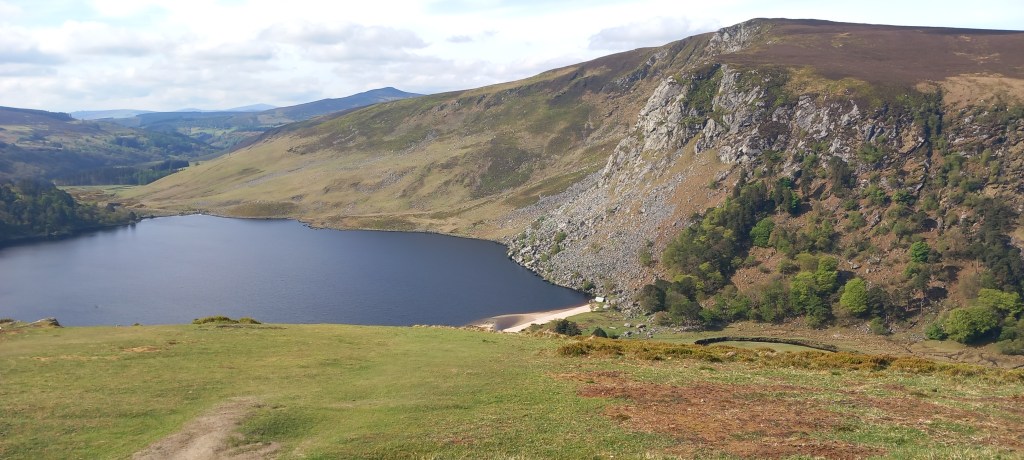
Driving south out of Dublin brings you to the Wicklow mountains which are a continuous upland area of heath, bog and grasslands, dotted with lakes and rivers.  Blessed with good weather, we were treated to some fantastic views, much enhanced by the brightly coloured gorse everywhere.  Very few parking areas are provided, and the roads are narrow – hence minimum photo opportunities. 

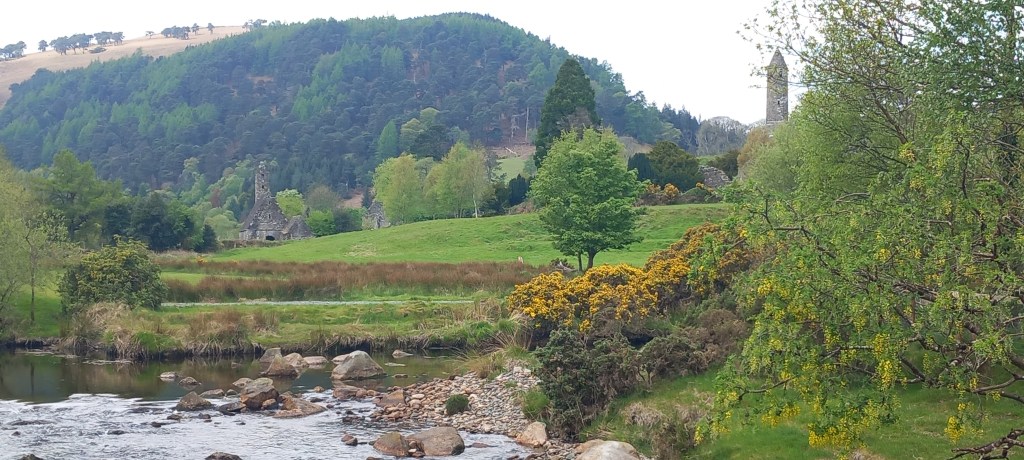
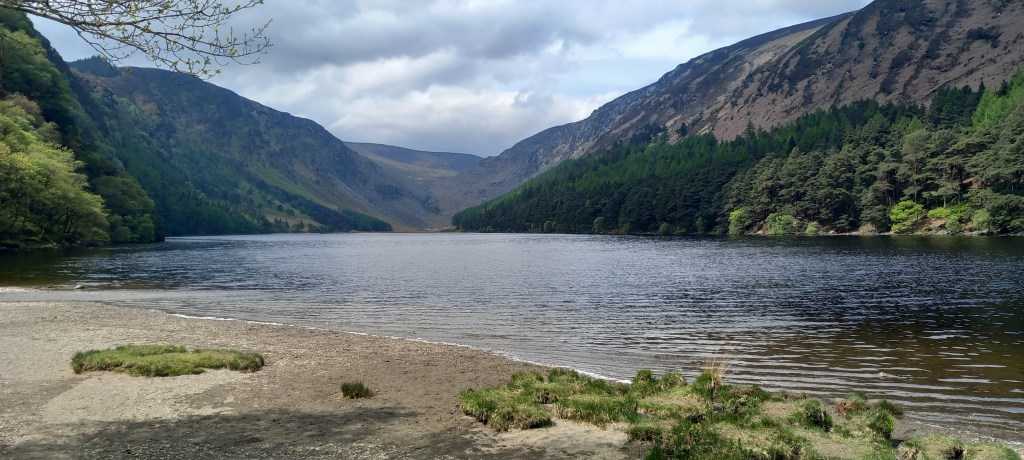
The ruins of the 6th century monastery at Glendalough are well interpreted and set in a beautiful valley.  A well-preserved Round Tower takes pride of place amongst the centuries-old gravestones, and ruined buildings.  This type of round tower is almost exclusive to Ireland – they were built at important church sites throughout the country during the 10th, 11th & 12th century. 

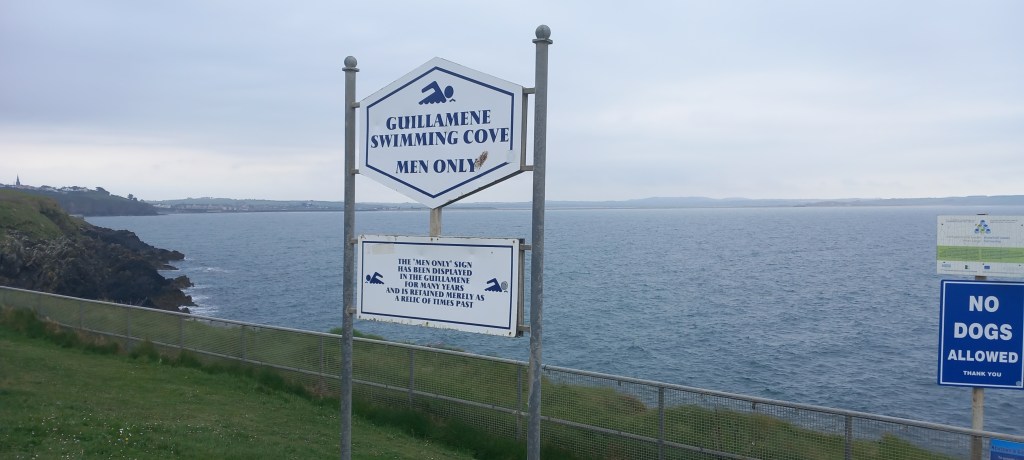
Tramore – Our campsite for the Bank Holiday weekend, is at Newton Cove on the south coast near Tramore.  The cove itself is a ten-minute walk away and is a magnet for wild swimmers.  We were amused by the Men Only sign, left over from the days of segregation of the sexes.  There were just as many women in the water as men, despite cold winds and grey skies! 

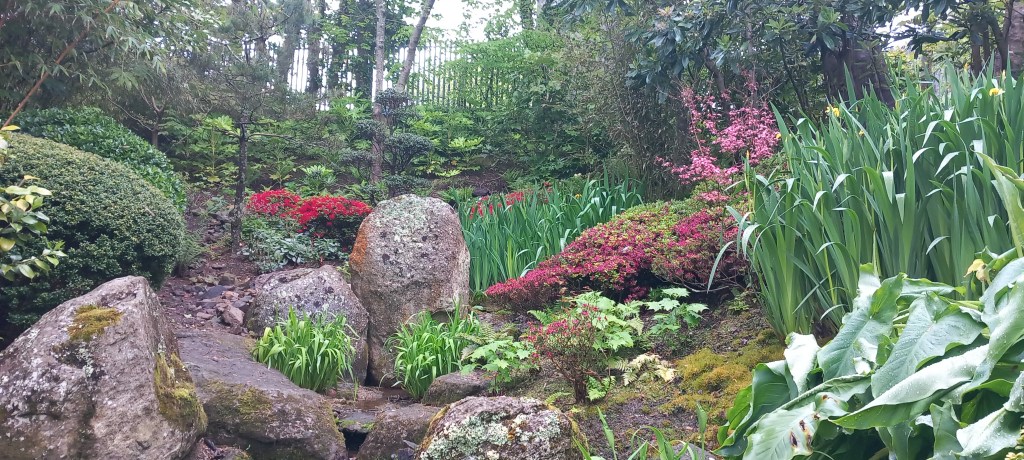
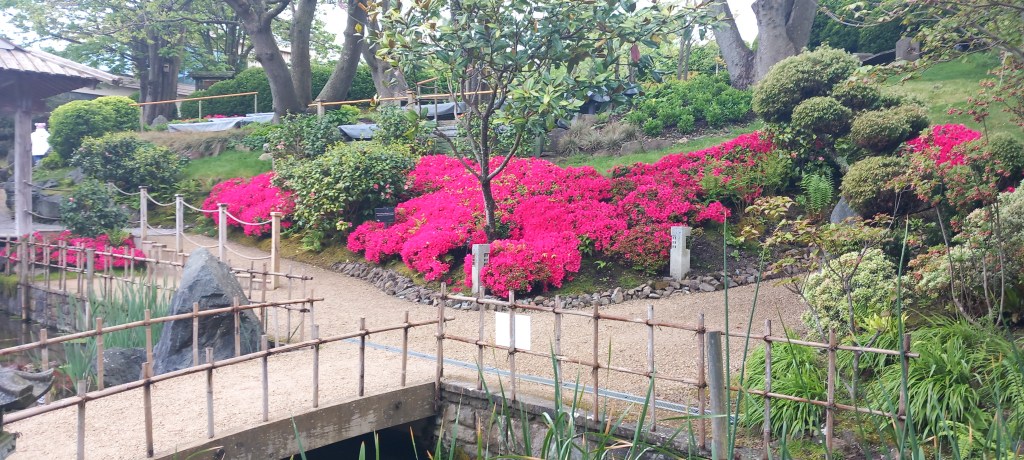
We couldn’t resist a visit to a Japanese Garden here in Tramore.  It celebrates the life and work of Lafcadio Hearn, who spent much of his early childhood in Tramore, before settling in Japan.  Cleverly designed around rocks and rock formations, the usual ‘tea house’ and little bridges over trickling streams all intercepted with bright swathes of colour in the azaleas and blossom. 

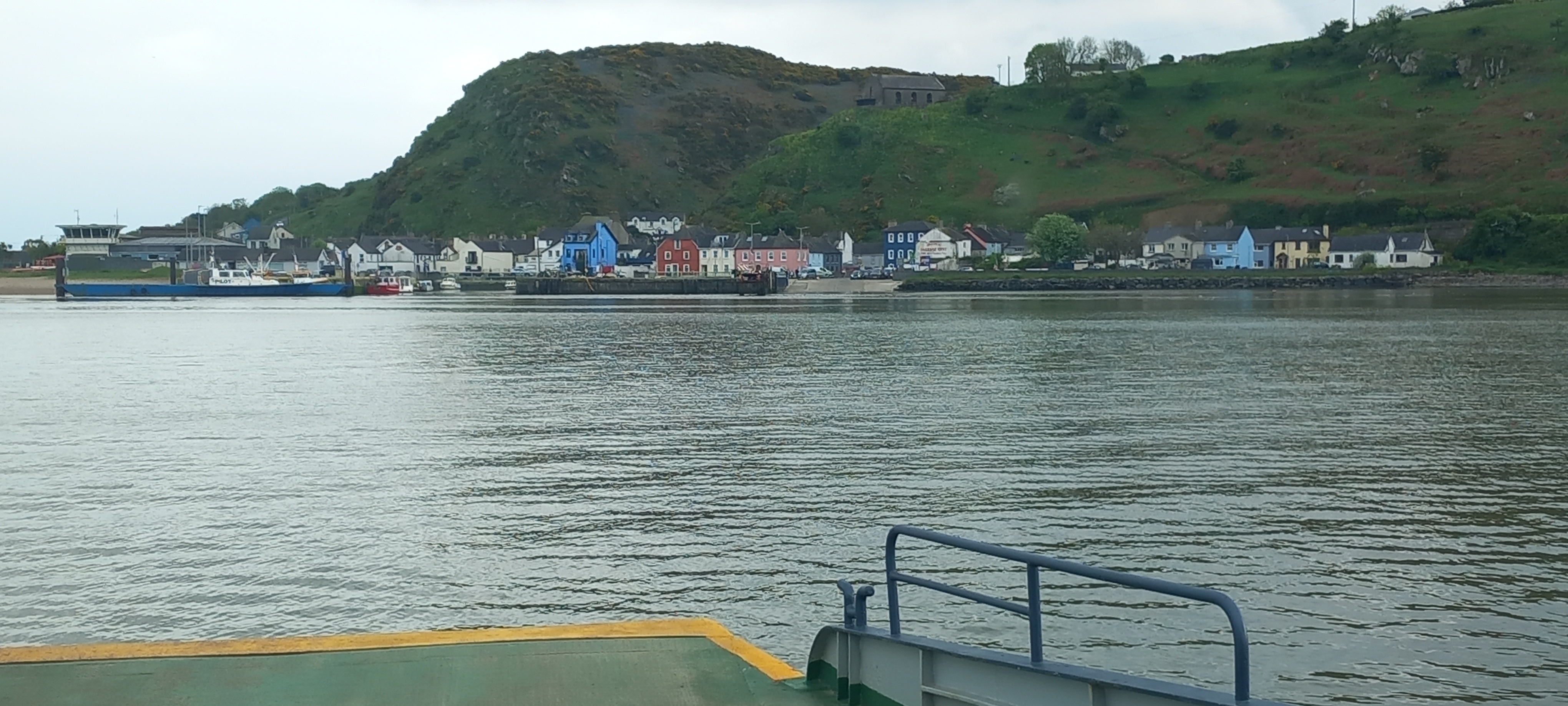
Hook A recommended drive around the Ring of Hook did not disappoint.  The Hook Peninsula is to the east of the Tramore – with a convenient little ferry across Waterford Harbour.

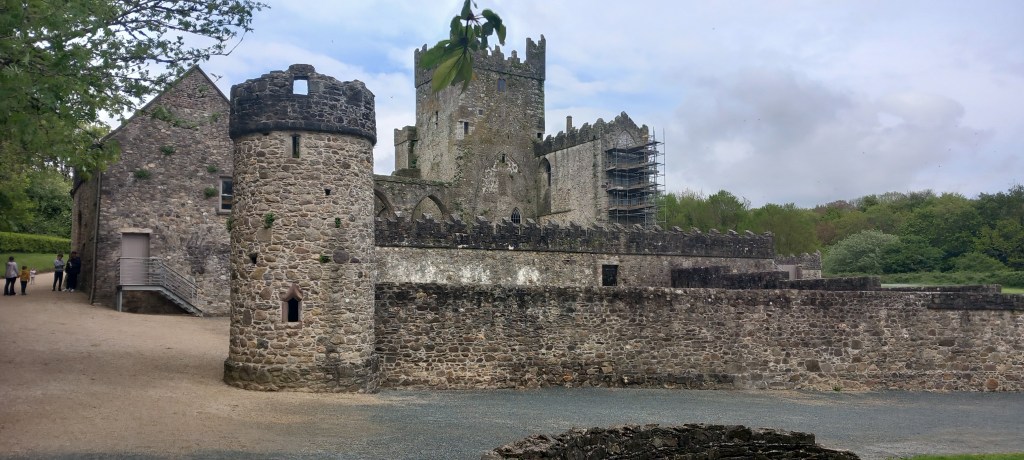
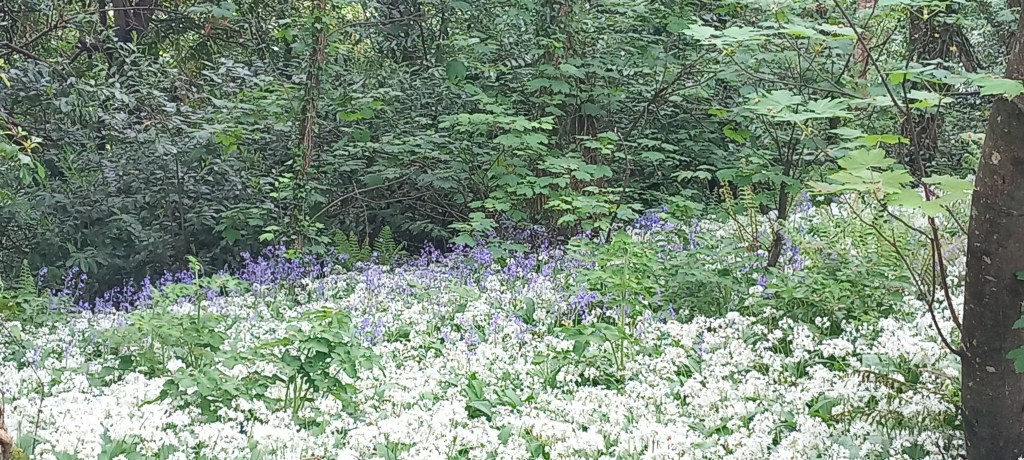
We were intrigued to visit Tintern Abbey (yes! you read that correctly) – the locals describe this as Tintern Minor, as opposed to Tintern Major in Wales! This Tintern was founded by Cistercian monks in the 1200s.  After dissolution in the 1500s, it was granted to the Colclough family who modified the abbey and lived there for the next 400 years.  The Georgian Walled Garden still exists today – another little gem!  The great swathes of wild garlic and bluebells along the pathways were stunning. 

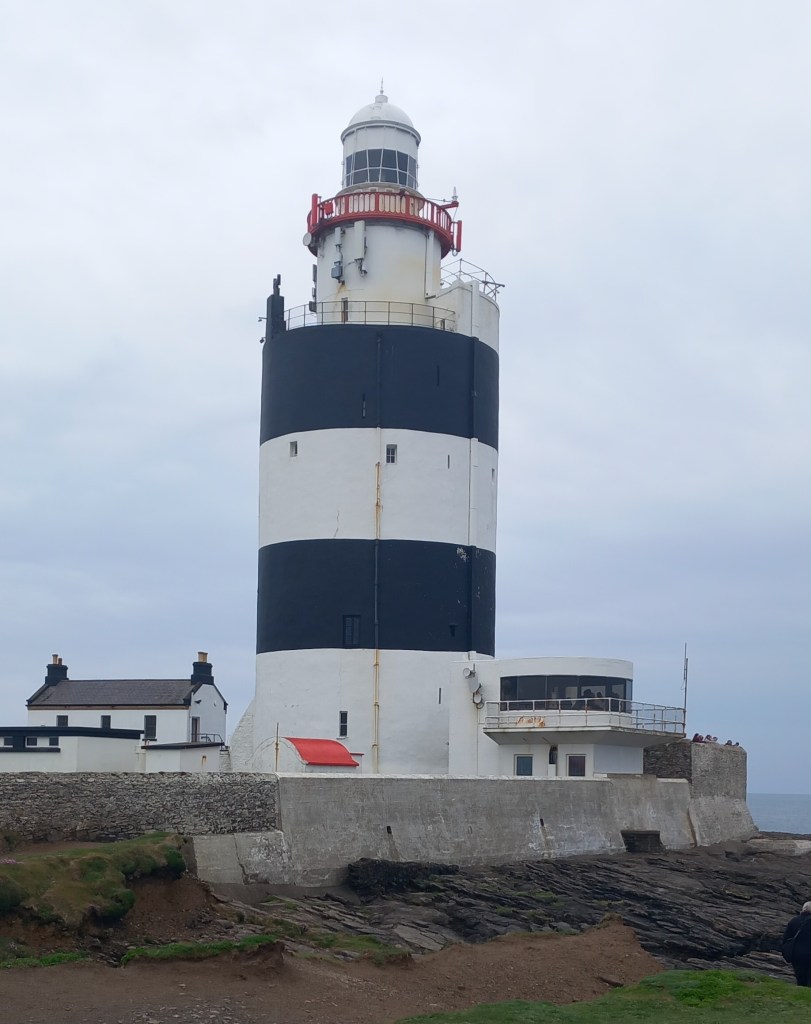
Hook point itself is dominated by the lighthouse, reputed to be the world’s oldest operational lighthouse. 

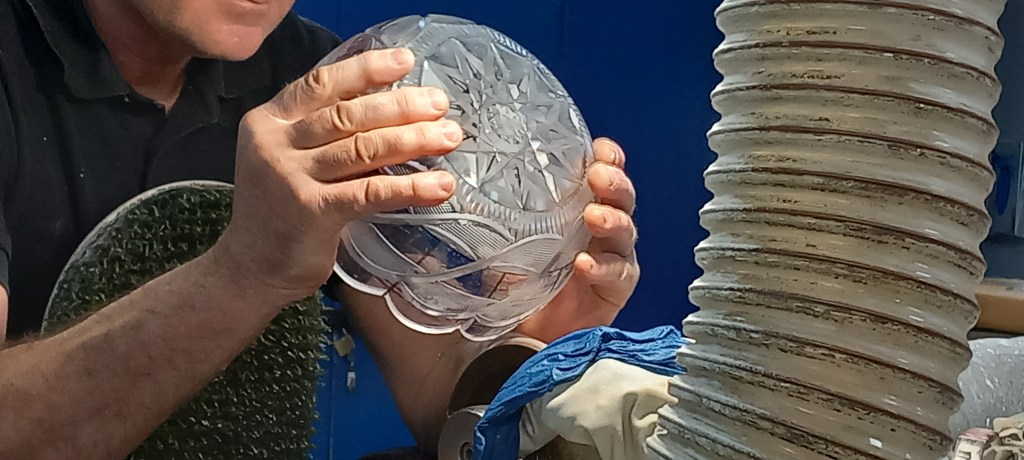
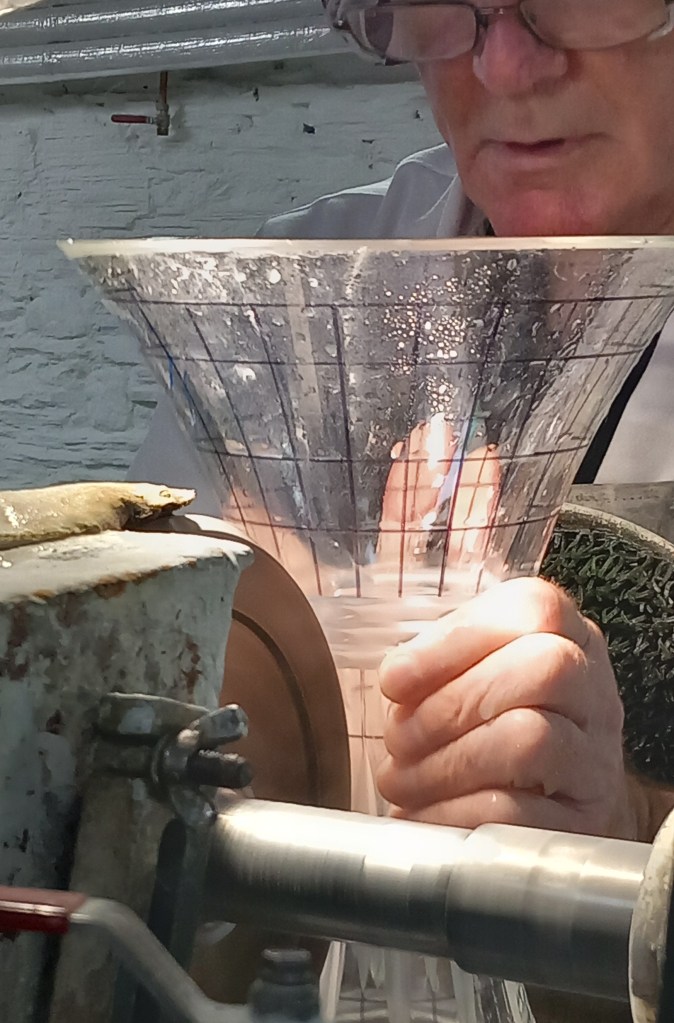
Waterford – A twenty-minute bus ride from our campsite is the country’s oldest city – Waterford. It was established as a fortified ship haven by the Vikings in 914 A.D. Bad planning on our part meant that our visit was on Bank Holiday Monday when most shops and a lot of cafes and restaurants were closed.  However, we were thrilled to visit the narrow streets and the harbour as well as the city’s gem – Waterford Crystal. Being a true foreigner, I have often wondered why people revere this particular crystal.  An excellent tour of the factory was sufficient to ‘put me in my place’!  From the hand-crafted wooden moulds (made from local beech) to the blowing area, on to the hand marking area where the intricate designs are marked. We were awe-struck watching the cutters holding the delicate crystal shapes to a diamond cutter, with their fingers being inches away from danger.  The sculpting and engraving areas were just as riveting.  It’s a five-year apprenticeship in whatever individual part of the process you fancy, and it’s then a further three years to qualify as a master craftsman. It was nice to hear that the master craftsman gets to keep the piece that he has presented for his final certificate. (worth £££££!)   

With each piece being made to such perfection, I can begin to understand the eye-watering cost of this exquisite crystal. Sadly, such an investment isn’t on the cards for us!

We move on to Cork and the Wild Atlantic Way tomorrow – see you next time. . . .

A much anticipated holiday in Ireland

Hello dear followers

We will shortly be leaving for a 5 week touring holiday in Ireland. We have never been before (unlike a lot of you), and we can’t wait to see the promised spectacular scenery.

We have packed clothes for all four seasons – Molly is loaded to the gills! Wet weather gear, and wind-proofs are at top of the agenda!

In view of the ups and downs with diesel prices, and indeed the problems with supplies, we have spoken to both the British Consulate in Dublin, and to the tourise office in Cork. They both assure us that there are no travel restrictions, and the demonstrations are over. Diesel prices are in some cases, cheaper than they are here. “You MUST come” they both said. “The route you have planned is not to be missed!”

As always, I will post an entry once or twice a week, and include a some photos when I can.

See you in Dublin . . . . .

Northern Lights

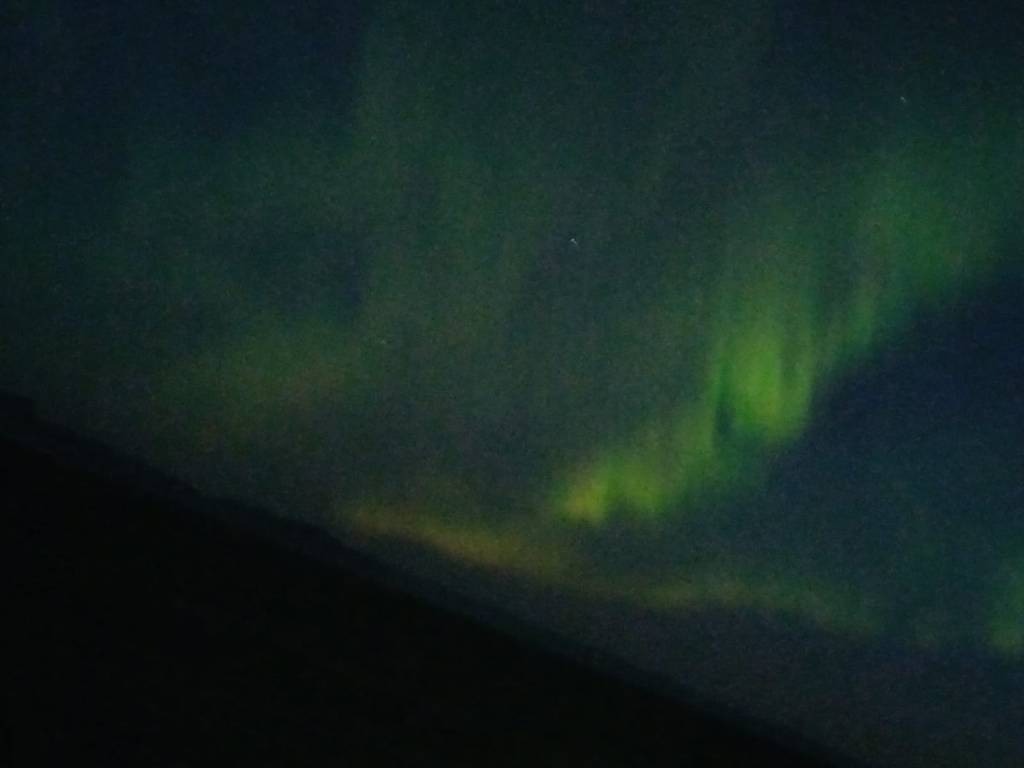
As promised, I just had to tell you all that we FINALLY SAW THE AURORA BOREALIS last night.  Getting up and dressed at 1am was a shock to the system, but so worth it!  Peter’s mobile phone is more up to date than mine, but our onboard astronomy/photographer had all the correct camera kit and urged us to download his photos. 

From the deck of Bolette with Peter’s mobile phone
Photo by our onboard astronomer/photographer

Another from our onboard photographer

This ‘compensation cruise’ has only served to whet our appetite!  Despite our previous misgivings over life on the oceans, we have now ‘got the bug’!  Watch this space . . . more holidays planned both on land and at sea . . .

Thanks for your loyal support.    

Visiting the North Coast of Iceland

Yes!  The cloudy skies and mist began to lift for us, as we made our way back through Prins Christiansund.  This waterway wiggles through the inlets and islands of the Cape Farewell Archipelago.  Once again, we were ‘blown away’ by the beauty of pure, untouched nature.

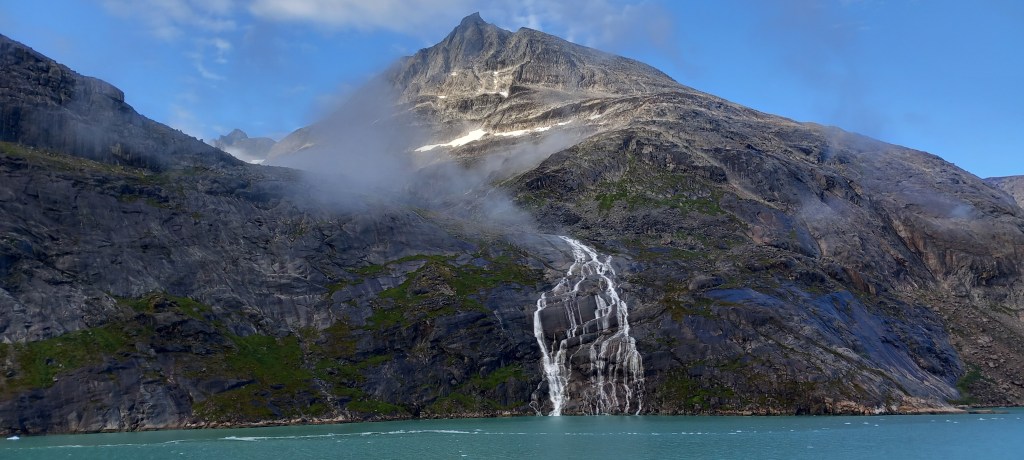
Glacial ice melt pouring down the mountainside
Glaciers melting much more quickly with climate change
Leaving Greenland near the exit from Prins Christiansund

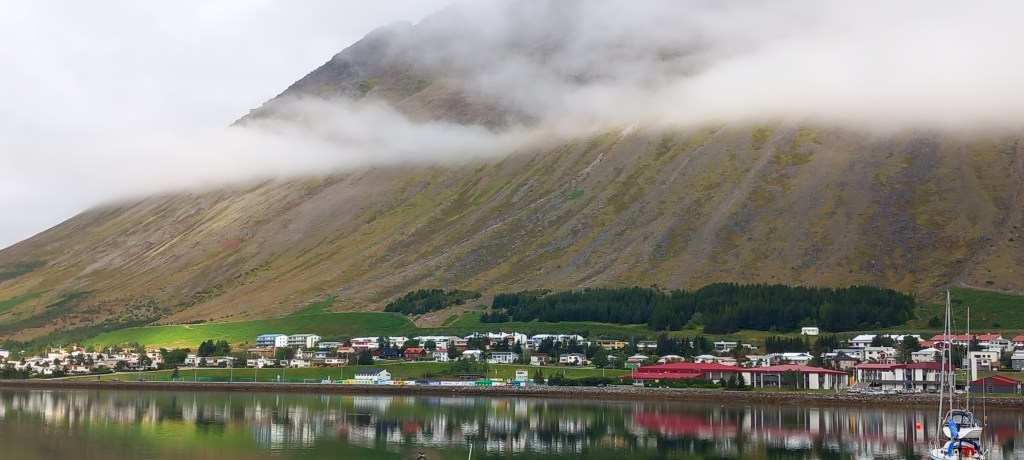
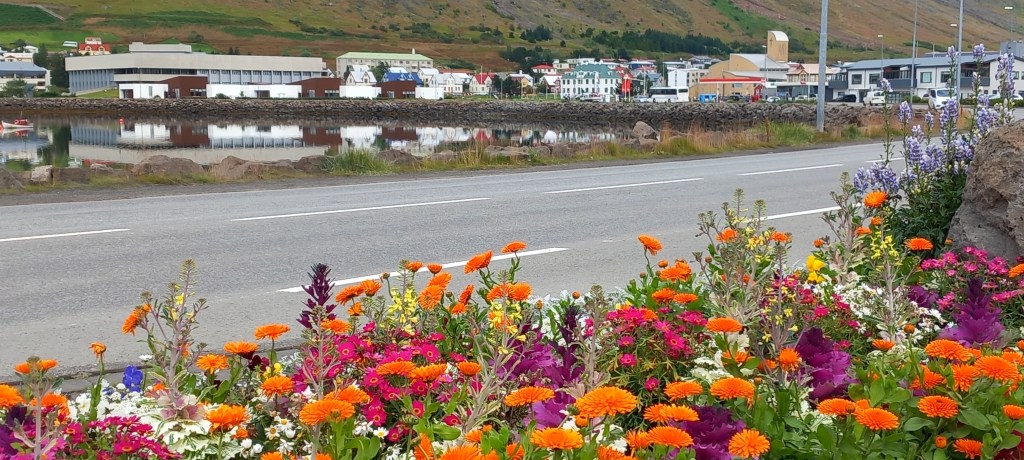
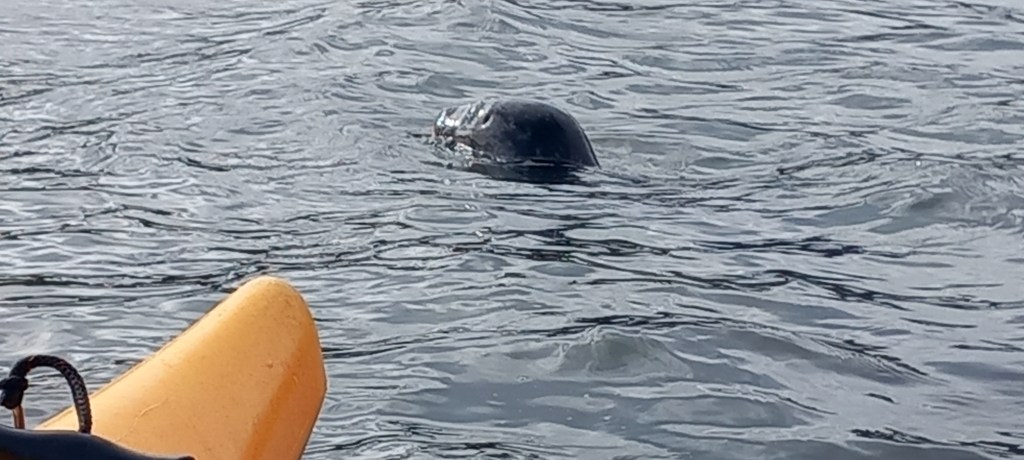
Isafjordur (pronounced Is – SAF – fjor – dur) and which translates to “fjord of ices” is in a spectacular location nestled between high mountains on one of the many inlets along Iceland’s north coast.  With a population of 2500, its community have learned to live with huge amounts of snow – normally 15 metres annually – along with glorious summers during which their economy is given a gentle boost with incoming cruise ships!  Avalanche barriers protect the town – avalanches being very frequent due to the steep mountain sides.  We really enjoyed two hours of kayaking in the afternoon sunshine, especially as one of the local seals decided to join us for most of the way around the fjord. 

Isafjordur – avalanche barriers behind the green swathes protect the residential areas
Summer flowers adding a shot of colour before the cooler weather comes
A seal enjoying the company of our kayaks

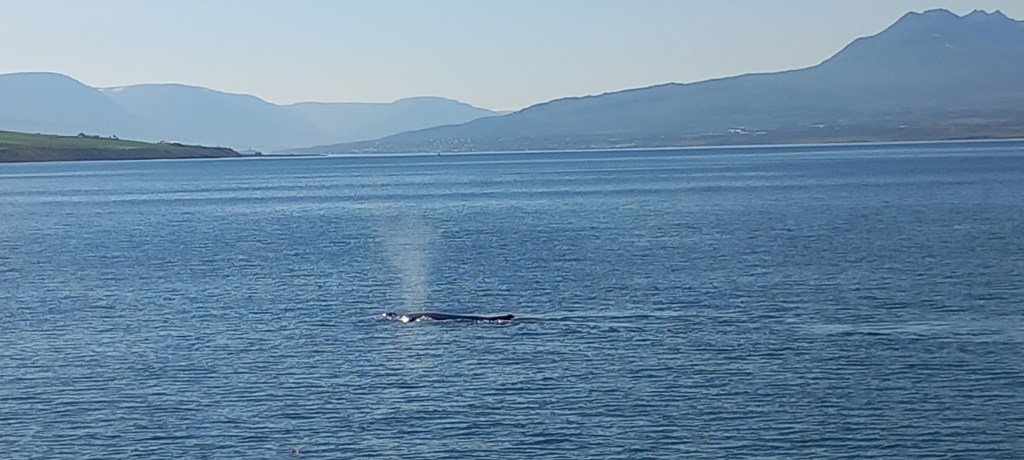
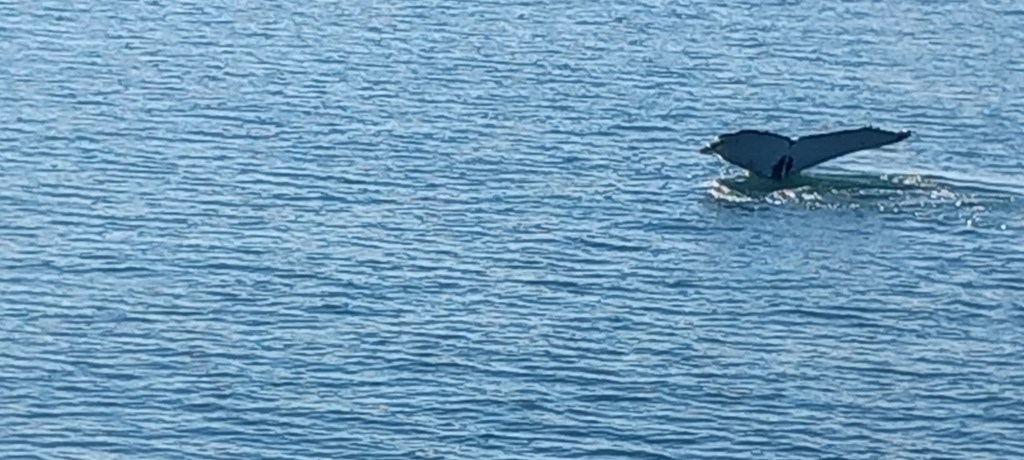
Akureyri  is a city (pop 20,000) situated at the end of the 60 km long Eyjafjordur fjord further west from Isafjordur.  Mountains tower above the town and along the fjord, with heavily farmed lowlands along the water’s edge.  Magnificent green fields stand out against the rugged mountainsides.  During the summer the fjord becomes a feeding ground for whales and dolphins.  We were thrilled to see humpback whales busily feeding before they migrate to their winter breeding grounds in the Caribbean (16,000 miles round trip!) 

Humpback Whale surfaces to fill his lungs
Humpback whale about to ‘dive’ for food

Sadly, we are now homeward bound – two & a half days sailing to reach Liverpool early on Friday morning.  We hope  (fingers crossed for good weather) to see the Northern Lights tonight as we briefly cross the Arctic circle. Our onboard astronomer says there is a ‘high chance’!  I shall return to report on our success (or not) later on . . . . .

Greenland Experiences

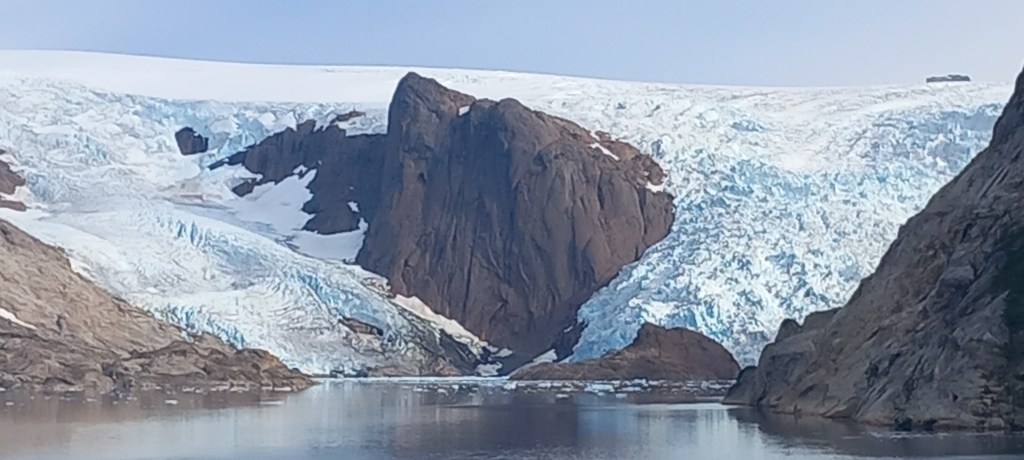
Greenland, (which translates to ‘fertile land’) is the world’s largest island. The south of the island has many little inlets and islands, and we were lucky enough to enter Prins Christiansund on a sunny day.  Very cold (winter coat, woolly hat and gloves) temperatures accounted for the numerous icebergs floating past us, but the clear sunny skies gave us a wonderful cruise alongside dramatic mountains and glaciers.  Sadly, we had to turn around halfway along the Sound because of ice floes blocking the route. 

Where the southern Icefield meets the sea
Beautiful reflections in the sunshine

Our first port of call was Narsarsuaq (nar-sar-suak), a settlement of 125 inhabitants, where Bolette dropped her anchor offshore and we were ‘tendered’ ashore.   Sheep farming and fishing sustain the community. The little school has eight pupils with two teachers.  A supply ship arrives every 14 days.  90% of the island’s electricity is hydroelectricity.  I’m sure the odd visit from a cruise ship helps the local economy no end – the local tour company and the one supermarket do a roaring trade! 

May the two never meet!!

Narsarsuaq increased in size dramatically during WW2, when the Americans built an airbase here.  A very informative museum and a few little houses still exist along the runway which now deals with small light aircraft from other parts of Greenland. 

Just a few houses left near the runway

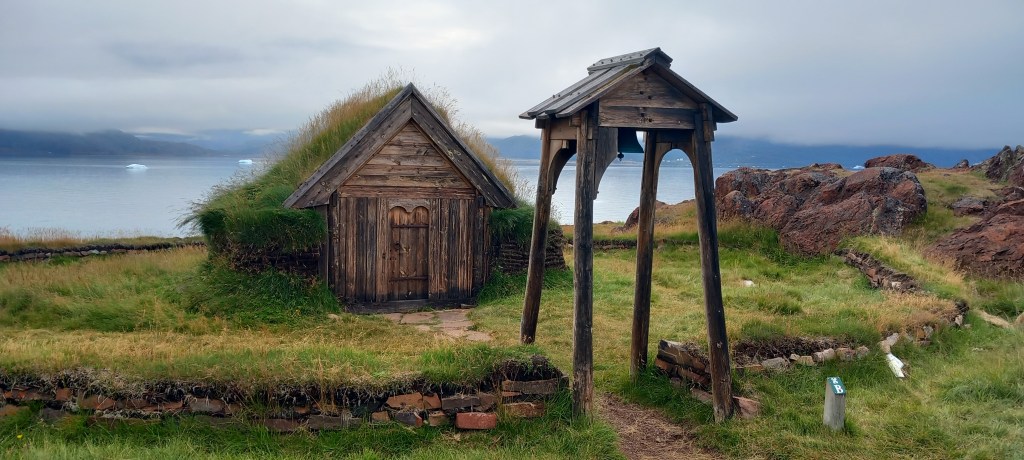
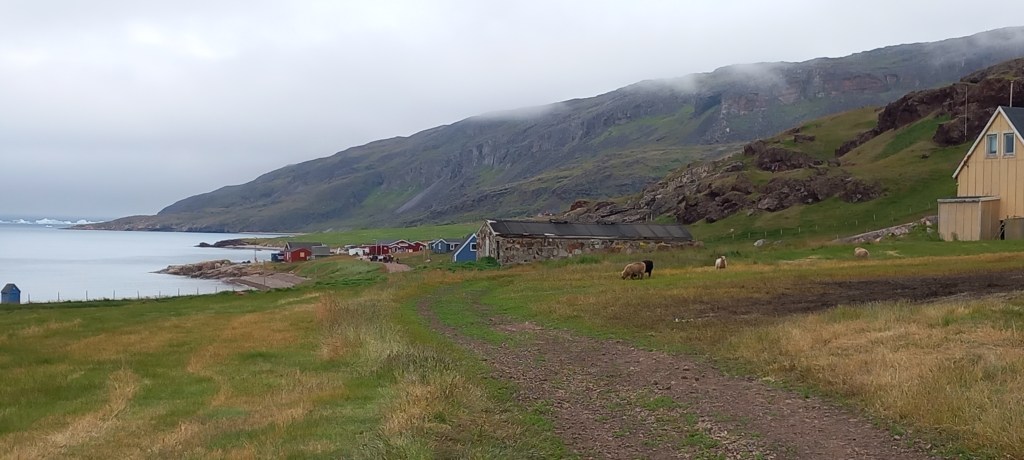
We enjoyed a boat ride across the fiord to the tiny hamlet of Qassiarsuk, where Eric the Red first settled in the late 900’s.  Ruins of the Viking’s long houses are still visible, along with a replicas of a long house and the first Christian church. 

A replica of the first Christian church in Greenland
The tiny hamlet of Qassiarsuk

Our luck ran out with the weather as we travelled along the south coast – the Captain announced that for our safety AND our comfort we would spend 24 hours in the quiet harbour of Narsaq, in order to avoid a VERY strong swell and thick, pea-soup fog.  This deep harbour used to be where foreign trading ships would anchor.  Seal blubber and skins would be traded for coffee, sugar, bread and buckwheat.  Again, the local economy must have benefitted from our arrival.  The brewery was opened as were the two cafes and were doing a roaring trade.  We chose to walk out of town and upwards towards a viewpoint looking over the ship and back to the town.  Thick mist and frequent, heavy rain showers did nothing for the photos!

Bolette safe in Narsang’s deep harbour
Narsung – ancient trading post

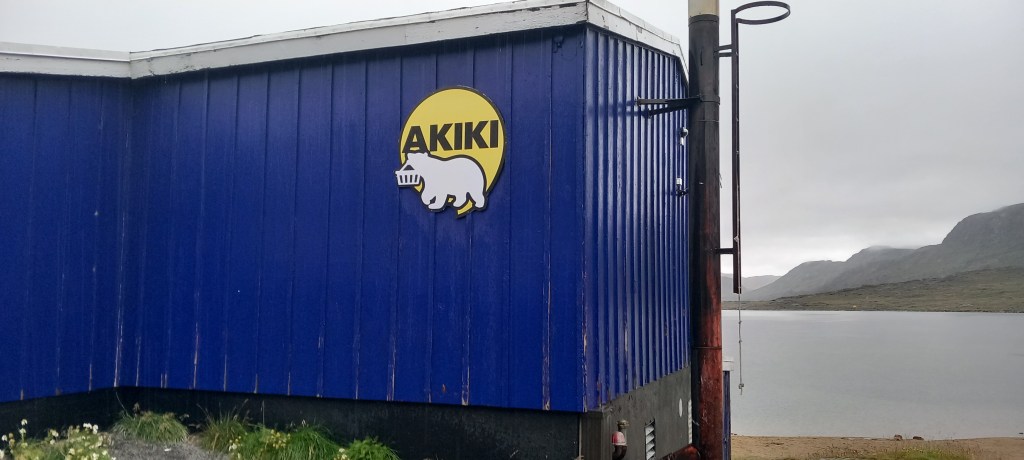
Qaqortoq was our last port visit in Greenland.  It is Southern Greenland’s largest town with 1300 inhabitants.  Very colourful houses were on show through the mountain mists.  The colours were explained to us as follows:  Red for ‘official people’, Blue for any businesses, Yellow for hospitals and caring.  People would paint their houses according to where they worked.  Sadly the tradition is dying out, but people still like to paint their houses in bright colours. 

Blue for business – even the polar bears do their shopping here!!
The colourful town of Qaqortoq (Bolette passengers boarding the tender to return to the ship)

We chose to do a guided walk around the Great Lake.  As you can see from the photos, the weather closed in on us!  Very heavy rain persisted – the only plus of the rain is the resident mosquitoes don’t come out in the rain!! 

the Great Lake emerges from the mist during a brief break in the rain

Fascinating place  – uncanny to be bothered by mosquitoes when icebergs are still floating on the fiords.  The wildflowers are beautiful, if you can find them in the mist!

Greenland’s national flower – “little girl” given to young ladies upon their engagement

We now make our way back to the northern shores of Iceland.  The Captain has just announced that we will go through Prins Christiansund on our way as the ice floes have moved and we can journey all the way  – will the mist lift? Fingers crossed!    

I’ll tell you later . . . . .

Iceland and Greenland Cruise

Crossing the North Atlantic

Hello again folks:  I felt I must share with you our journey north . . . . . .For those of you who like to ‘track’ us, we are on Bolette  (not Borealis)  – they are ‘sister-ships’ and the lay-out is exactly the same  (and I still don’t know my way around!!) 

For the non-cruisers amongst you, the check-in system is very organized and straight forward.  No standing in long queues for hours!  Seats are provided and we are called forward according to the colour of our luggage labels.  Our luggage is collected from the car by a porter who takes it away to go through security, and we next see it standing outside our cabins a couple of hours later.  We were onboard and enjoying lunch within an hour of arriving at the port drop-off point. 

We sailed at 5pm on the dot . . . much noise from the ship’s hooters to say goodbye to Liverpool.  I only wished that Tanya had been in her office – it’s so close, we could have waved!  By now, the earlier rains had cleared and we enjoyed a sunny evening.  The first evening is all about unpacking, settling in, finding your dinner table and ‘eyeing up’ who your neighbours are going to be! 

They say it takes a few days to find your ‘sea legs’ – however . . . .we were dropped in at the deep end!!  A force 8 gale with driving rain greeted the ship as we left the protected waters of the Irish Sea and the North Channel. . . . VERY rough seas with 6 – 8 metre waves stayed with us throughout our first day at sea.  Walking about on the ship was a challenge, as we were lurched from one side of the corridor to the other  – grabbing handrails or standing firm with your legs apart and knees bent  (very unlady-like but very Elvis Presley!) became the norm.  Huge thanks to my dear friend Rose, who introduced me to Echinacea tablets for seasickness – along with wrist bands, the echinacea worked a treat. (Yes, I know that echinacea is normally a herbal cold remedy, but in this case, I’m guessing it also settles the balance in the middle ear).   We noticed that the dining room was fairly quiet for dinner  – many people had a miserable day.  As you’ll remember from our last cruise, during rough seas, the swimming pool is emptied, and the gym and walking promenade are closed for safety reasons. 

What a change on Day 2 as we awoke to sunshine and a much calmer sea. 

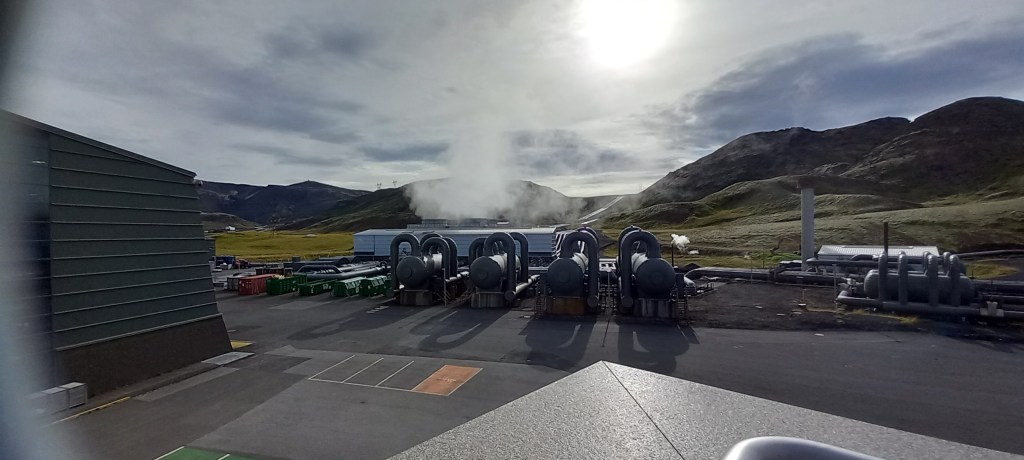
Day 3 – Reykjavik (meaning Smoky Bay) from where we enjoyed a full day’s guided tour, much helped by beautiful weather and a very knowledgeable guide.  Iceland is the ‘youngest’ country in the world and has been independent since 1940.  Two tectonic plates run through Iceland, (the North American and the Eurasian) which are separated by a huge fissure. (read on, to find out more!) Much of the island is a hot spring . . . plumes of steam can be seen billowing out of earth.  The islanders take full advantage of this by producing geothermal power for 99% of their population.  In simple terms, the steam is used to produce electricity, then sent back underground to heat water – 3000 km of pipe work provides residents with hot water.  The impressive power station is the biggest in Europe and the 8th biggest in the world. 

Plumes of steam in the lava landscape
Biggest Geothermal Power Plant in Europe

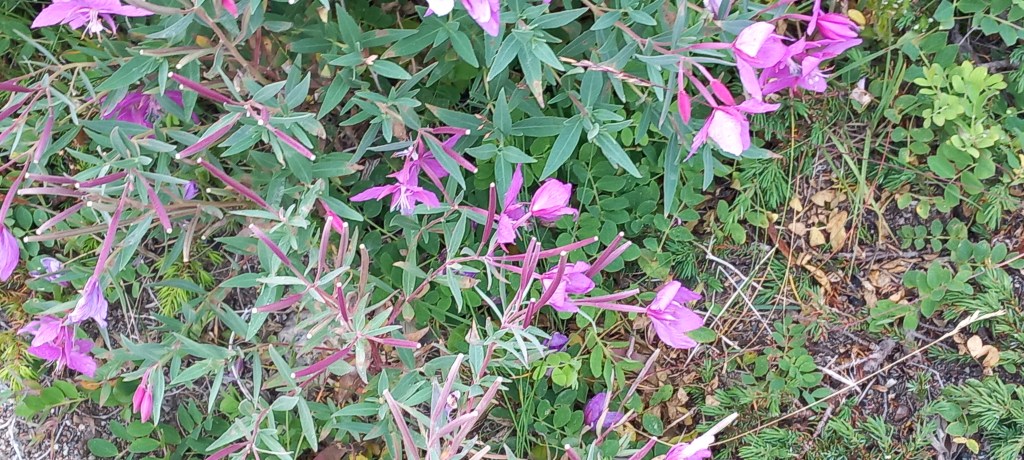
Two thirds of the island’s 400,000 population live in the Reykjavik area.  No one lives in the mountains – which of course, are fairly active volcanoes.  There have been 12 volcanic eruptions since 2001 and earthquakes are almost a daily occurrence!  Icelanders are made of strong stuff!  There are 200 glaciers spread over 11% of Iceland.  The countryside to the south of the island appeared quite flat, but always with jagged mountains nearby.  The native tree is the birch which is very slow growing and rarely gets very high.  Lava fields are the norm – those that we saw were covered in a thin layer of moss. 

Native birch trees
The ‘Long’ Glacier spreads for miles behind these mountains

Large areas have been cleared for farming – sheep roam for the summer but are brought to shelter for the long, cold, dark winters.  The Icelandic horse is very much revered – it is very strong, despite being smaller than our horses, and has five ‘gates’  (I’ll let you look that one up!)  Apparently, if Icelanders take their horses out of the country (eg for a competition) they are NOT permitted to bring them back to Iceland because of the threat of disease being carried.  It must be so sad to have an award-winning horse which one must sell on.   Leaving it behind must be so hard – or maybe I’m just a softie! 

Geysir is an area – you guessed it! – of bubbling geysers, one of which spurted forth every 6/7 minutes.  Did you know the Icelanders created the word ‘geyser’? 

Smelly bubbling mud!

The Golden Waterfall was a spectacular sight – two waterfalls totalling 31 metres in height, plunge into a 70-metre-deep canyon which stretches for 2.5 km.  Colossal amounts of water thundering through the valley make an awe-inspiring sight.

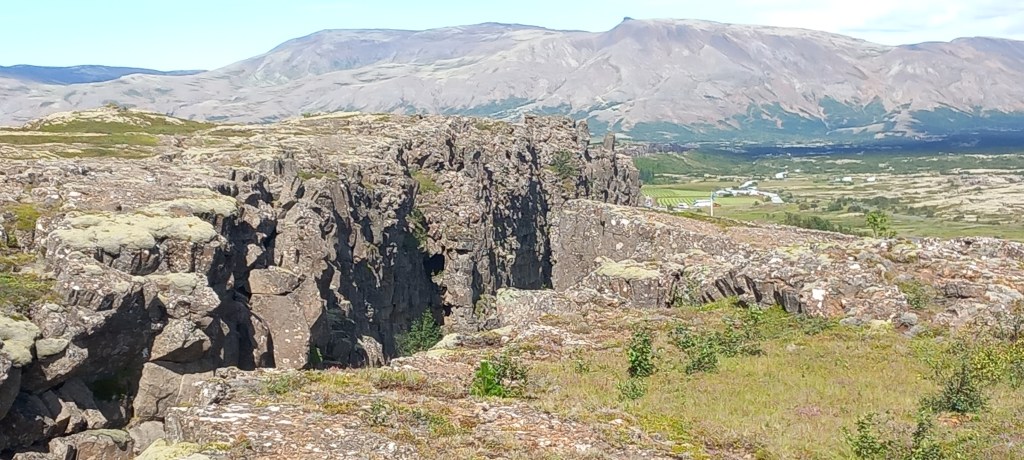
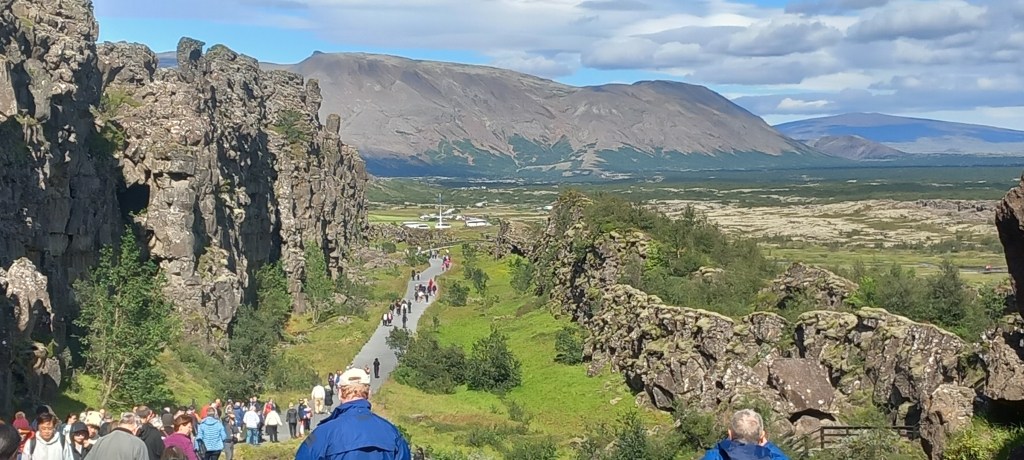
Our last stop was to one of three National Parks in Iceland.  Overlooking a huge lake (84 sq km) of pristine clear but VERY cold water (glacial melt), is the Silfra fissure.  This huge fissure separates the two tectonic plates mentioned above which are moving apart by 2 cm per year.  Walking through the fissure, surrounded by mounds of lava was, I felt, quite a creepy experience!

The Silfra FissureNorth American Plate on one side, Eurasian Plate on the other
Walking through the fissure
Fissures everywhere – creepy!

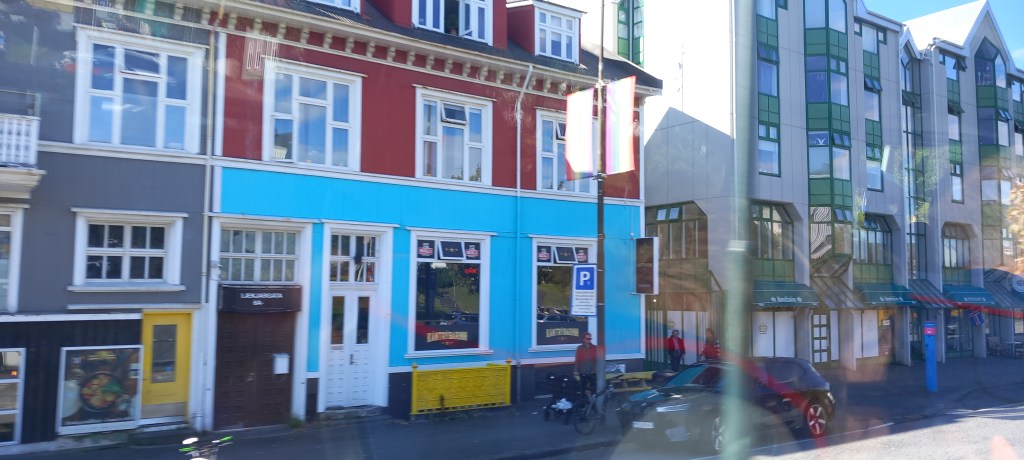
A very quick drive through Reykjavik on our way back to the ship, gave us a taste of a modern and very carefully built city.  Older wooden houses are now covered in corrugated iron for insulation and protection against the harsh weather – they’ve been painted in bright colours, symbolic of their history. 

Brightly painted houses in Reykjavik

We return to Iceland later in the cruise, but today we are bouncing around at sea again (Force 6 gale today!) on our way across the Denmark Strait to Greenland  – very jealous of the reported English heat wave!!

Iceland and Greenland

Hello again trusty followers: Just to give you a heads-up that we will set off shortly for our ‘compensation cruise’. To remind you . . . . . that due to our round-the-world itinerary being changed thanks to problems in the Red Sea, we were all given generous amounts of compensation . . .but only to spend on Fred Olsen! So . . . . . thinking that it would be rather difficult to take Molly up to Iceland and Greenland (although I have been told it is possible!), we’ve chosen this cruise . . .hoping we get there before Trump does!!

It’ll be interesting to see how we feel about cruising after a two week holiday, compared with our three and a half month one! By the way, a little plug . . .Peter and I will be giving a talk on our Round-the-World cruise at the October U3A meeting – 20th October, 2:30pm at the Larruperz. Non-members are always welcome (they ask for a £2 donation)

You’ll hear from me again, once we’ve got the WIFI set up onboard, and there’s something interesting to tell/show you. . . .See you then